Category: NJ History

  • The Terrible Fate of the Frelinghuysen Brothers, Part 2: Ulster County, NY

    Facebooktwitterredditpinterestlinkedinmail

    By Helene van Rossum

    Helene van Rossum is a Dutch-born researcher and writer, who worked at SCUA as public services and outreach archivist from 2016-2018

    In our previous blog post we talked about the death of Johannes Frelinghuysen, Dutch minister in the Raritan Valley, and about his widow Dina van Bergh, who married Jacob Rutsen Hardenbergh from Ulster County, NY. In this post we will follow up with Johannes’ three younger brothers, two of them called by Ulster parishes to be their minister. Their fate played a role in a schism in the Dutch Reformed Church in the American colonies between the “Coetus” and the “Conferentie” factions, and therefore ultimately in the establishment of Queen’s (later Rutgers) College.

    Perished at sea: Jacobus and Ferdinandus

    Hand colored engraving of the New York harbor, 1739 (source)

    When Johannes Frelinghuysen died of a sudden illness in September 1754 on his way to an annual meeting of the Coetus, the ecclesiastical body was no more than an assembly of ministers and elders representing their congregations. But its position and function would soon be subject of a sixteen-year-long battle. As explained by former Rutgers University Archivist Tom Frusciano, the lack of authority within the churches to educate, examine, and ordain had become a pressing concern among ministers and congregations. While the numbers of churches had grown rapidly by the mid 18th century, there was a severe shortage of ministers to preach.

    It was difficult to find Dutch ministers willing to move to the New World, like Johannes Frelinghuysen Sr. had done in 1720. For congregations it was a costly business to send a candidate to the Netherlands to be educated, licensed, and ordained. In addition, the journey was not only dangerous because of weather conditions, but also because of continuous warfare at sea. In 1745, on his way back after his ordination in Utrecht, Theodorus Frelinghuysen Jr. himself spent six additional months at sea because his ship had been captured by the French.
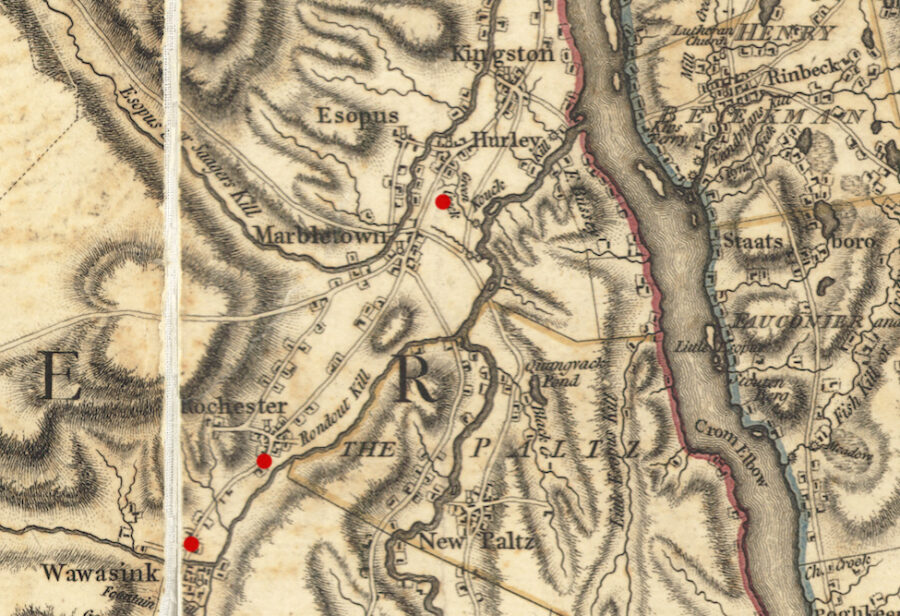
    Detail from a 1779 map between Kingston and New Paltz in Ulster County, NY, with the location of the churches of Marbletown, Rochester, and Wawarsing added in red (source)

    Despite these experiences, the Frelinghuysen brothers still favored the traditional way to get ministers licensed and ordained in the Netherlands.

    According to historian Dirk Mouw, “As late as 1751, when he assisted the congregations of Marbletown, Rochester, and Wawarsing, New York, in making out a call to his brother Jacobus, it was Theodorus Jr. who urged, and finally convinced those consistories, not to ask for examination and ordination in the colonies, but rather to permit Jacobus to go to Amsterdam for promotion.”1

    After Theodorus had convinced the three Ulster consistories to send Jacobus the young man and his brother Ferdinandus–who had been called to Kinderhook, 22 miles south of Albany, NY–left for the Netherlands. Sadly, when they sailed back two years later they both contracted smallpox and died in June, 1753, eight days apart. Though Theodorus notified the Classis in September 1753, it took him another month to be able to write the three Ulster consistories. The letter is kept at Rutgers Special Collections and University Archives along with other documents about the three Ulster congregations  (view document list).

    “It is not without emotion that I take up my pen to write to you presently, after the Lord prescribed us bitter things, cutting off our hopes, hurting our expectations, turning our happiness into coldness and our imagined joy into sadness, as he took away our dearly beloved brothers Jacobus and Ferdinandus, lovable and beloved in life, and unseparated even in death. 

    But he is the Lord: he has given, he has taken, praised be his name. They were his, he has taken them to himself, a glorious change for them, but a heavy blow for us.”

    Letter from Theodorus Jacobus Frelinghuysen Jr. informing the congregants of Marbletown, Rochester, and Wawarsing about the death of his brothers Jacobus and Ferdinand, October 22, 1753

    Battle for the Benjamin, Henricus

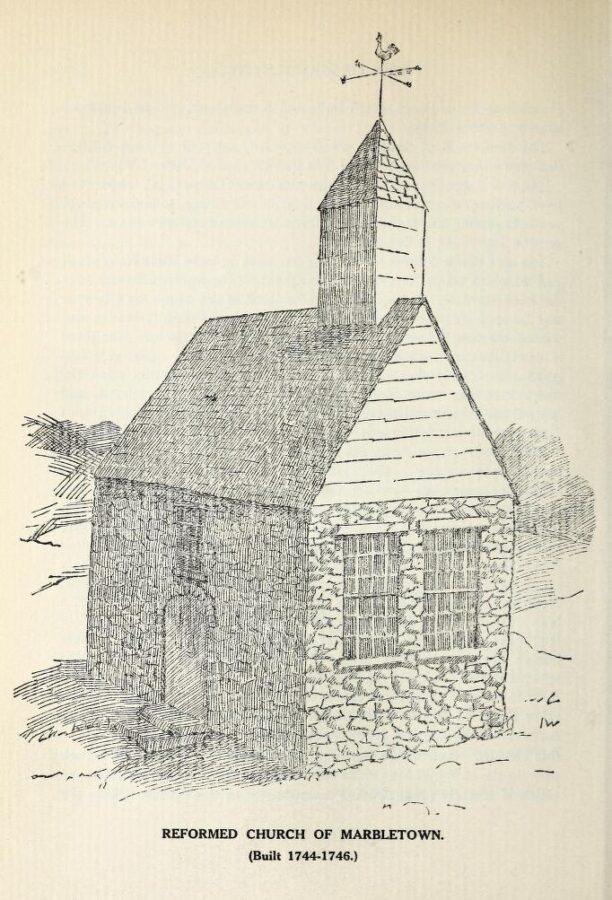
    Illustration from The History of Ulster County, New York (1917)

    The death of the two Frelinghuysen brothers put new fuel on the smoldering fire. Soon after the news that their new minister had died, the congregations of Rochester, Marbletown, and Wawarsing decided to call the youngest brother, Henricus. Johannes Frelinghuysen in Raritan wrote to the Classis in August to ask for Henricus to be licensed and ordained by the Coetus.

    “Not only has the loss of those two fine young men inflicted upon us a wound so severe, that we have the less courage now to let Henricus run the risk of the sea as well as other dangers; but he is the Benjamin in our family, and he has never had the smallpox. Churches have also already expressed their desire to have him as their minister. My humble request, therefore, of your Revs. is, that our Coetus may be authorized, upon evidence of his ability, to ordain him in the name of the Classis. Our case is an extraordinary one, and so there are extraordinary arguments for this request.”

    On November 3, 1753, the three Ulster consistories wrote the Classis of Amsterdam themselves. One month later, they sent Henricus a call, listing responsibilities and obligations on both sides. The Dutch letter with sixteen wax seals, which is translated in English, is also kept at Rutger Special Collections and University Archives.
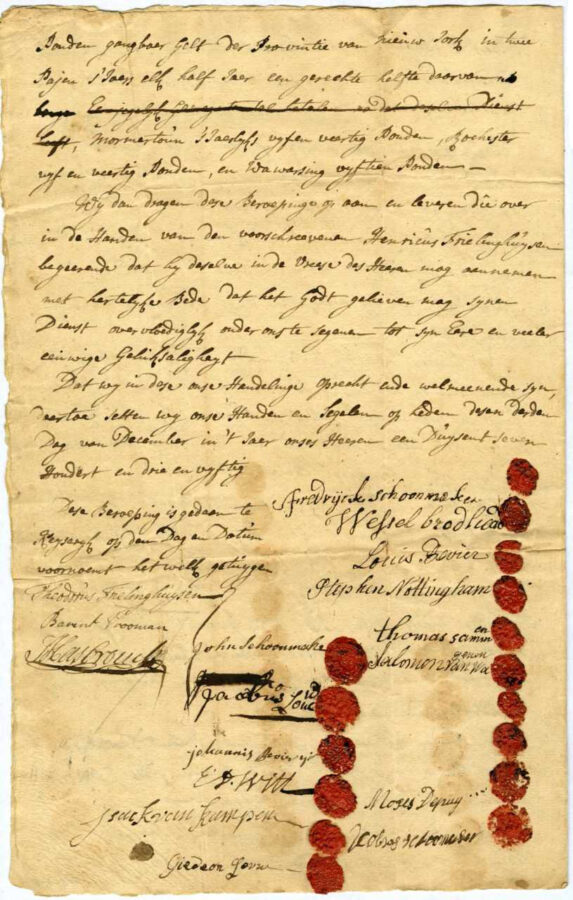
    Last page of the call by the churches of Marbletown, Rochester, and Wawarsing to Henricus Frelinghuysen, December 3, 1753 

    The Coetus – Conferentie schism

    In reply to his letter of August 1753 the Classis of Amsterdam wrote Johannes on May 6, 1754 that he should send Henricus over anyway. No doubt Johannes wanted to discuss the matter during the following Coetus meeting in September, but he died of a sudden illness on his way to Long Island. Nevertheless, during the three-day-long meeting it was decided to change the Coetus into a Classis, which, according to the minutes, would free congregations from the heavy expenses of sending their candidates overseas as well as the young men’s exposure to danger and the loss of time. An important additional reason was also provided: “Thus too we can prevent persons from seeking ordination from other communions differing from ourselves.”

    Members of the Coetus soon found out that their president had organized an alternative, conservative, assembly, called the “Conferentie.” In addition, he negotiated behind their backs that the newly founded King’s College in New York (the future Columbia University) would have a professor in theology to teach prospective Dutch ministers. Though educated here, they would still have to be ordained by the Classis of Amsterdam in the Netherlands.

    In response Theodorus Jr. in Albany wrote the congregations a circular letter, calling for a meeting on May 23, 1755 to establish an American Classis and found their own American College. Thus started the schism in the church between the Coetus and the Conferentie Party, which would tear communities and families apart for the next sixteen years.

    Henry dies too
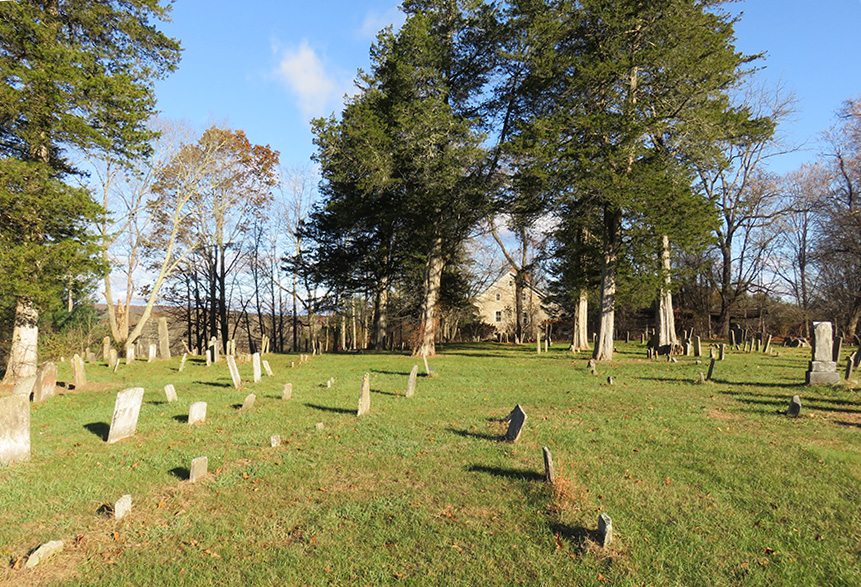
    Marbletown Reformed Dutch Church burial ground, the possible grave site of Henricus Frelinghuysen (Photo: Wendy Harris)

    Henricus was licensed by the Coetus in 1754, but he would not hold his position at Rochester, Marbletown, and Wawarsing for long. Only two weeks after his ordination by the Coetus in 1757, after the Amsterdam Classis had finally relented, he died of smallpox, like his brothers Jacobus and Ferdinandus before him. According to the Conferentie party in a letter to the Classis of Amsterdam Theodore Jr. defended his brother’s ordination during his funeral sermon and “sought to open the eyes of the people, saying that it was time to look away from the Classis.” One year later Jacob Rutsen Hardenbergh from nearby “Rosendale” in Hurley would similarly be ordained by the Coetus to succeed their brother Johannes Frelinghuysen in the Raritan Valley in New Jersey.

    You will find out about the sad fate of Theodore, the last remaining Frelinghuysen brother, in a following post by University Archivist Erika Gorder.

    1 Mouw, Dirk Edward. “Moederkerk and Vaderland: Religion and Ethnic Identity in the Middle Colonies, 1690–1772.” Ph.D., The University of Iowa, 2009.


    Part of the contents of this blog post were shared in the presentation “’That class of people called Low Dutch,’ African Enslavement Among the Dutch Reformed Churches of Ulster County and New Jersey’s Raritan Valley,” by Helene van Rossum and Wendy Harris at Historic Huguenot Street, New Paltz, NY (April 7, 2018).

    With thanks to Wendy Harris.

  • The Terrible Fate of the Frelinghuysen Brothers, Part 1: The Raritan Valley

    Facebooktwitterredditpinterestlinkedinmail

    By Helene van Rossum

    Helene van Rossum is a Dutch-born researcher and writer, who worked at SC/UA as public services and outreach archivist in 2016-2018

    In our previous posts we talked about Dutch Reformed minister Theodorus Jacobus Frelinghuysen (1691–c. 1747) as well as his enslaved servant Ukawsaw Gronniosaw, whom he purchased from his parishioner Cornelius Van Horne and converted to the Calvinist faith. This post and the next will be about the fate of Frelinghuysen’s five sons, who all became ministers themselves, but died within a short time.

    The Frelinghuysen family

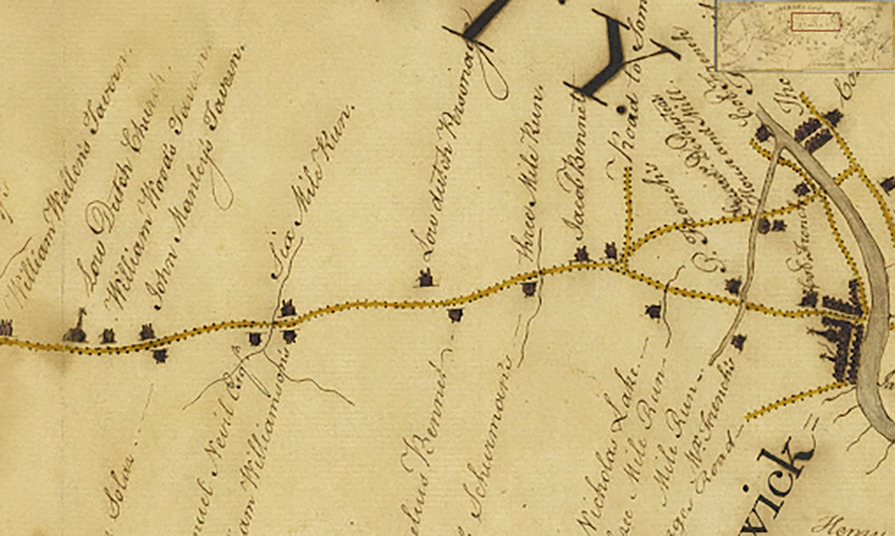
    Detail of a 1762 map showing the Dutch parsonage along the King’s Road between the two creeks Six Mile Run and Three Mile Run (source)

    Not too long after Theodorus Jacobus Frelinghuysen became the new minister of the Dutch congregations of Raritan, Three Mile Run (including New Brunswick), Six Mile Run, and North Branch he married Eva Terhune from Flatland, Long Island.1 They were given a farm near the Three Mile Run church to live in, and the first child, Theodorus Jacobus Jr, was born in 1723. His four brothers Johannes (John), Jacobus, Ferdinandus, and Henricus were born between 1727–1735 and two more girls, Margaret and Anna followed in 1737 and 1738.

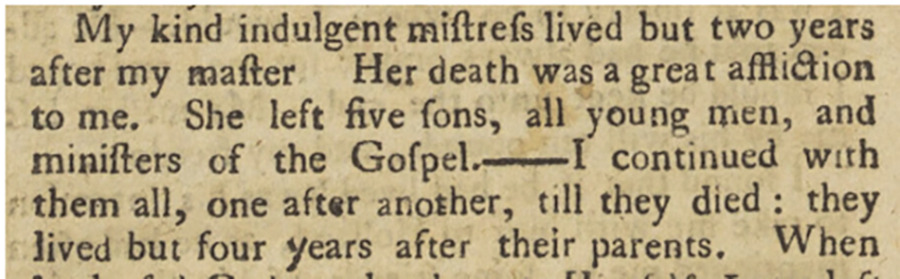
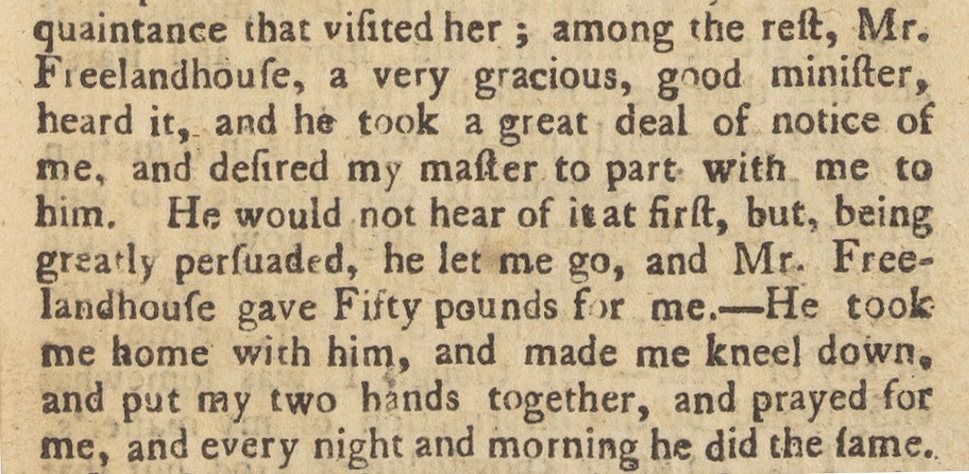
    Quote from A Narrative of the Most Remarkable Particulars in the Life of James Albert Ukawsaw Gronniosaw (1772) (source)

    We do not know exactly when Frelinghuysen purchased Gronniosaw in the 1720s, but the young African must have known all the children since they were very little. He was there when Theodore Jacobus Jr. left for the Netherlands in 1743 to study, be licensed, and ordained, and then answered a call to Albany, NY. He saw Johannes leaving for the Dutch Republic too in 1747, the year when Theodore Sr, fell ill. He helped care for the minister, who told him on his deathbed that he had freed Gronniosaw in his will.

    Though a free man, Gronniosaw decided to stay to serve the widow.  According to his Narrative he was heartbroken when Eva Terhune died, either shortly before or after her son Johannes’ return. The three younger brothers were between 15 and 20 years old at the time, their sisters 11 and 12.

    Johannes Frelinghuysen and Dina van den Bergh

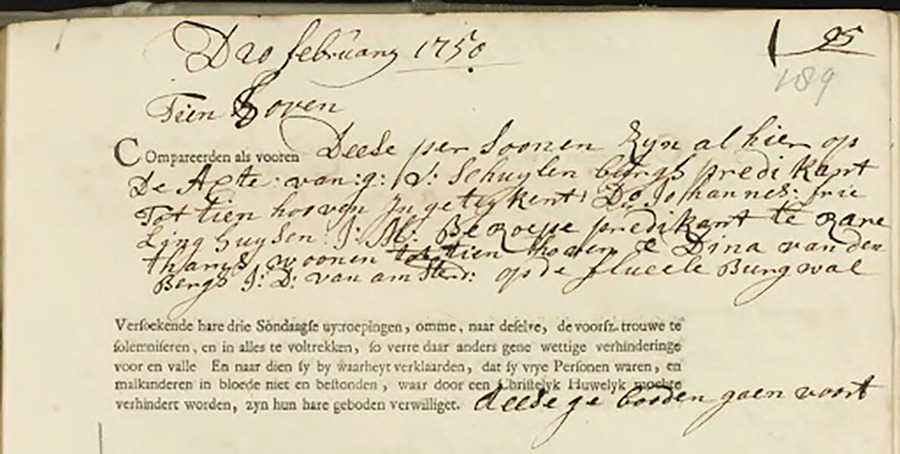
    Banns of marriage register entry for Johannes Frelinghuysen and Dina van den Bergh, Amsterdam, 20 February, 1750 (source), which mentions that Johannes was living with Rev. Gerard van Schuylenburgh in Tienhoven.

    After Eva’s death, according to his Narrative, Gronniosaw subsequently served her five sons, until they all died too. He may have started with Johannes. The young man had received a call from the parishes of Raritan (Somerville), North Branch (Readington), and Millstone (later Sourland, then Harlingen), written on May 18, 1749.

    When Johannes received the letter he was living in the parsonage of the Dutch pietist minister Gerardus van Schuylenburg in Tienhoven. Van Schuylenburg must have introduced him to the pious merchant’s daughter Dina van den Bergh in Amsterdam, with whom he had been corresponding. When John asked her in September to marry him and come with him to serve the parishes in the Raritan Valley the young woman was stunned.

    There are many stories about Dina, who signed her letters as Dina Van Bergh. She was so pious that she had refused the dancing lessons her parents wanted her to take. As a teenager she was said to have stopped her father and his friends playing cards for money by starting to pray when she walked into the room. She kept a religious journal in 1746-1747 and in 1749, which has been translated into English. In the last part she documented her struggles to accept John’s proposal under the heading “Some few notes on how my heart, through hidden instructions, was prepared and afterwards bent by the Lord towards marital relations with the Rev. Mr. Johannes Frielinghuysen, minister at Raritan in New Netherland.

    Life with John in the parsonage

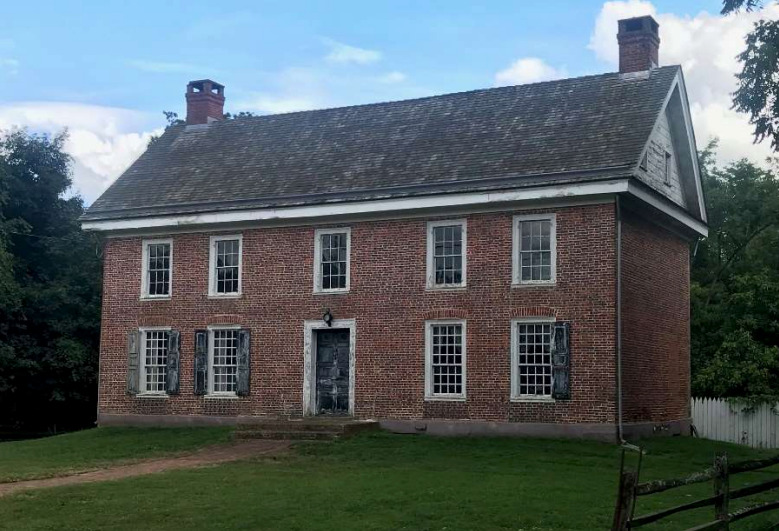
    The Dutch Parsonage, built for Johannes Frelinghuysen and his bride in 1751

    Dina hoped to send Johannes to New Jersey and fetch her one or more years later, but when a storm prevented him from leaving, she felt it was a sign from God to join him. According to local lore, the ship in which the couple finally sailed almost did not make it to the New World because of a terrible storm that caused a leak. In one story Dina had her chair tied to the mast of the ship and prayed throughout the ordeal, until the winds stilled. A swordfish was later found to be wedged in the crack, stopping the leak.

    Another story tells us the ship carried bricks for the new parsonage in Raritan to be built in by the three congregations. Constructed in 1751, the sturdy brick house is presently known as the “Old Dutch Parsonage” in Somerville. Before it was moved to its present location, according to a description of the building the parsonage had slave quarters and two wide fire-places and an oven in the basement. Though a free man, Gronniosaw would have slept in the basement, along with the enslaved servants Dina would refer to in a letter to Henricus in November 1754, published along with her diary.

    The couple had two children; Eva (born 1751) and Frederick (born 1753), the ancestor of the Frelinghuysen family of Somerset County. They were only toddlers when their father unexpectedly became sick and died in September 1754 during a trip to Long Island to attend a meeting of the Coetus (an assembly of Dutch ministers and elders). Dina went to fetch the body herself. The story goes that when the boat carrying the coffin pulled into the dock it could not come close enough to debark. Dina then ordered the coffin to be used as a bridge across the gap, telling the passengers “‘Tis only a shell, his spirit is gone. Cast it across.”

    Marriage to Jacob Rutsen Hardenbergh

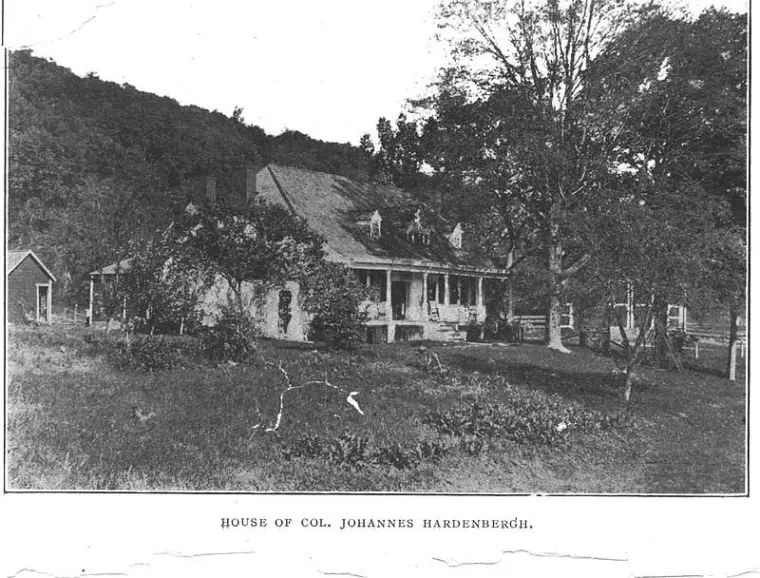
    “Rosendale,” home of Jacob Rutsen Hardenbergh’s parents. It is often mistakenly described as the house where Sojourner Truth lived until she was two (read why).

    The parsonage had also been used for teaching young aspiring Dutch ministers at the parsonage, who boarded there. One of Johannes’ students was future president of Queen’s (Rutgers) College Jacob Rutsen Hardenbergh from Ulster County, NY, son of Johannes Hardenbergh (1706-1786), who lived in a large house called “Rosendale” in what was still Hurley at the time. Jacob was eighteen when Johannes died and, as a boarder, must have known Dina well. Although he was probably aware that she wanted to go back home he proposed to the eleven years older widow to marry him instead. ”My child, what are you thinking about?” she reportedly exclaimed.

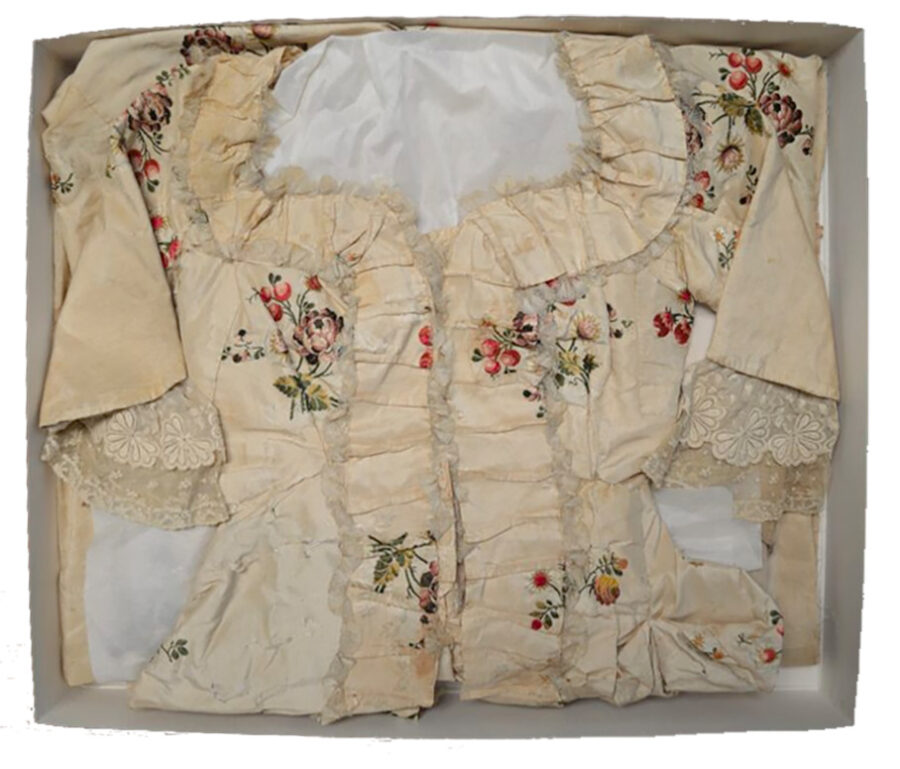
    Unwilling, Dina continued to make preparations for her trip home. But when a storm prevented her from leaving, she felt it was another sign from God. They moved in with Jacob’s parents in Ulster County, where he finished his studies. Formally called to be Johannes’ successor, Jacob married Dina two years later in Raritan and the family moved back into the Dutch parsonage. A dress that was passed down though the family as her wedding dress is kept at Rutgers Special Collections and University Archives.

    Wedding dress of Dinah Van Bergh at Rutgers Special Collections and University Archives

    Why Jacob Rutsen Hardenbergh did not go to the Netherlands to be licensed and ordained, like Theodore Jr., and John Frelinghuysen before him, we will hear in the following blog post: The Terrible Fate of the Frelinghuysen Brothers, Part 2: Ulster County.

    1  I am following genealogical findings published in Barbara Terhune, “The True Parents of Eva (Terhune) Frelinghuysen and her sister, Annetje (Terhune) Schuurman,” New Netherlands Connections, vol. 12, no. 3 (2007). An early version can be found online here


    Contents of this blog post were shared in a presentation “’That class of people called Low Dutch,’ African Enslavement Among the Dutch Reformed Churches of Ulster County and New Jersey’s Raritan Valley,” by Helene van Rossum and Wendy Harris at Historic Huguenot Street, New Paltz, NY (April 7, 2018)

  • Updates about Ukawsaw Gronniosaw Part 1: the Van Horne plantation

    Facebooktwitterredditpinterestlinkedinmail

    By Helene van Rossum

    Helene van Rossum is a Dutch-born researcher and writer, who worked at SCUA as public services and outreach archivist in 2016-2018


    Quote from A Narrative of the Most Remarkable Particulars in the Life of James Albert Ukawsaw Gronniosaw (1772) [source]

    When Scarlet and Black’s first volume Slavery and Dispossession in Rutgers History came out in 2016, it was Rutgers’ connection to Sojourner Truth that made the headlines. The chapter about James Albert Ukawsaw Gronniosaw, enslaved servant of Dutch minister Theodorus Jacobus Frelinghuysen–an early advocate of Queen’s College–did not get much attention. That is not difficult to understand, because Gronniosaw’s 1772 autobiography–the first book of a Black person to be printed in England–did not fit in the genre of abolitionist “slave narratives.” Just before the Scarlet and Black volume came out British historian Ryan Hanley published an article in which he not only identified the Dutch parishioner who sold Gronniosaw to his pastor, he also placed Gronniosaw’s book in the context of the propaganda war between pro- and antislavery Calvinists in England.

    James Albert Ukawsaw Gronniosaw (c.1705-75)

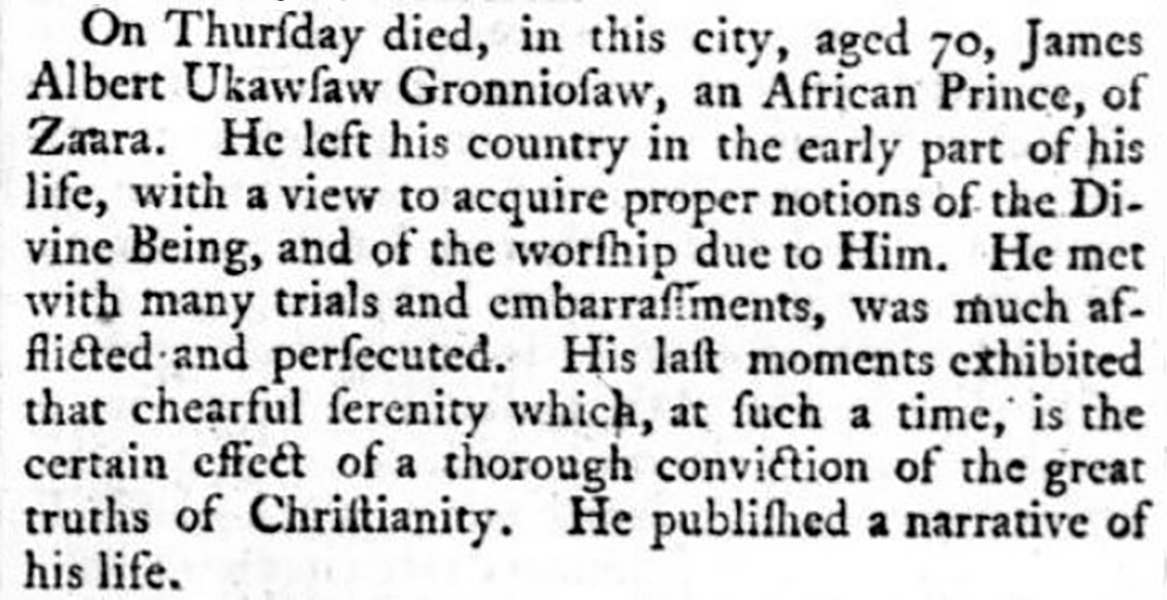
    Obituary in the Chester Chronicle or Commercial Intelligencer, Chester, England, October 2, 1775 (Source)

    Although he had spent most of his life in New Jersey, Ukawsaw Gronniosaw (who also used the name James Albert) died in England only three years after the publication of his book. According to his Narrative he was born an African prince, who willingly left his family and country as a young teen, because he was mocked for his belief in a power higher than the sun, moon, and stars that were worshiped at home. He ended up being sold to a Dutch captain who sailed to Barbados, where the boy was purchased by a young Dutch merchant with the name “Vanhorne,” who lived in New York.

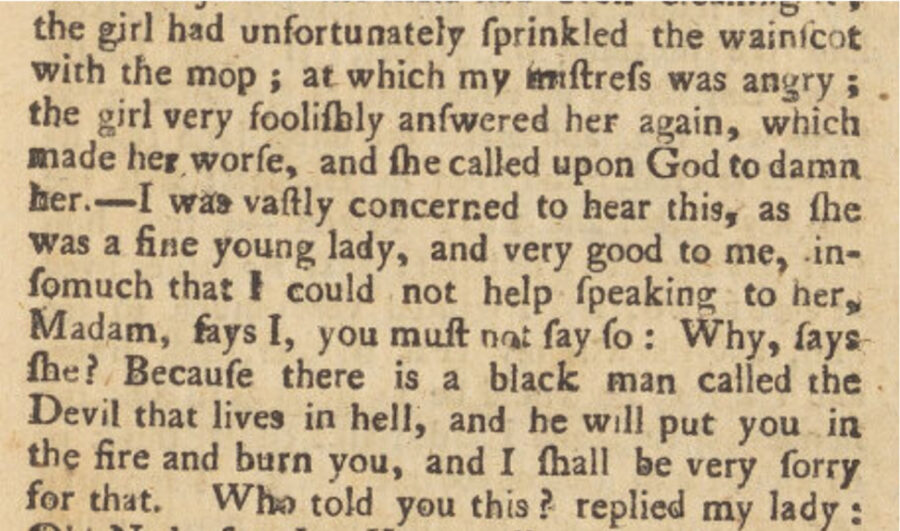
    Put to work as a house servant, the teenager’s second language became Dutch, which apparently included a lot of swearing. Everybody swore, according to Gronniosaw, so he did so as well. An old enslaved servant named Ned overheard how he scolded a servant girl and “called upon God to damn her.” Ned warned him about a “wicked man called the Devil, that lived in hell” and would burn all people who used those words.

    Quote from A Narrative of the Most Remarkable Particulars in the Life of James Albert Ukawsaw Gronniosaw (1772) [source]

    Terrified, Gronniosaw immediately stopped swearing. When he overheard his mistress swearing herself he felt obliged to warn her about the consequences. She shared the story with everybody in the neighborhood, which must have included Theodorus Jacobus Frelinghuysen. He had been minister of Raritan and three nearby Dutch churches in the Raritan Valley since 1720. But if she lived in New York, how would they have met?

    Cornelius Van Horne (1693-1768)

    The Van Horne family was a prosperous family of merchants in New York. According to Jan Cornelis Van Horne and his descendants the family’s founder and his young family emigrated from the Dutch city of Hoorn to New Amsterdam by 1645. His son Cornelius, a furrier and hat dealer, had three sons who all became wealthy merchants: Jan or John (1669-1735), Gerrit (1671-1737), and Abraham (1677-1741) van Horne. They traded, among others, from Barbados, owned land in New Jersey, and can be found among the sloop owners bringing captives into New York.

    Looking for the “young, Dutch merchant” among the next generation Ryan Hanley identified Jan’s son Cornelius Van Horne (1693-1768) as the one who purchased Gronniosaw from a Dutch captain sailing from Barbados. That would have made Elizabeth French, who married Cornelius Van Horne in 1718, the young, swearing, mistress whom Gronniosaw wanted to save from hell. Her father, wealthy New York merchant Phillip French, had owned a property of 2754 acres on the Raritan River in Somerset County, which was split between his two surviving daughters in 1722, when Elizabeth’s sister Anna got married to Joseph Reade.

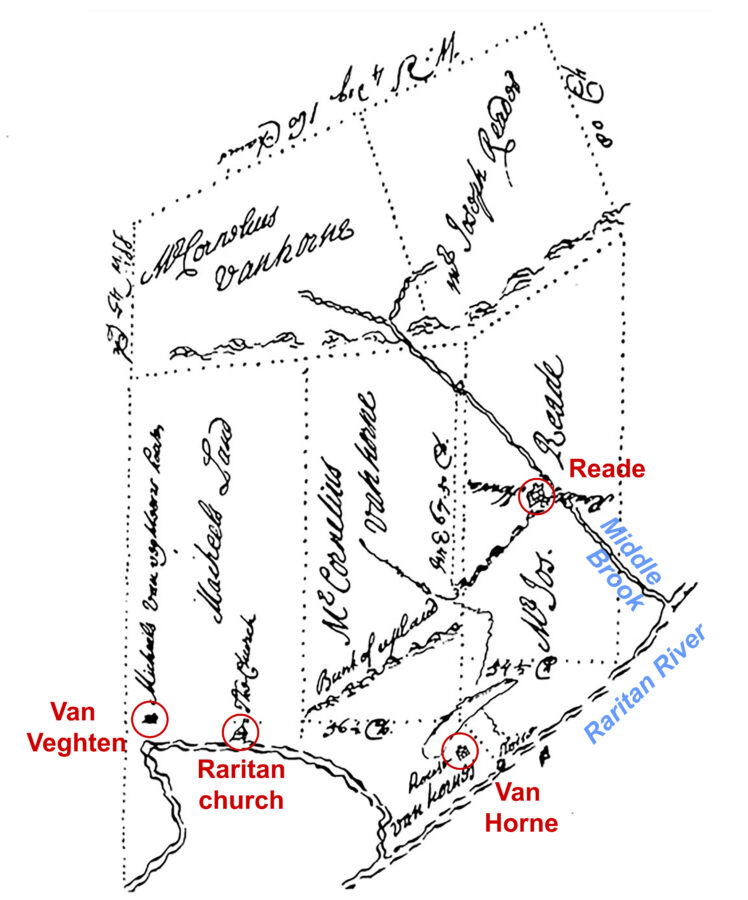
    Map that was part of the 1722 deed dividing Philip French’s property on the Raritan River. Annotated reproduction from “New Insights Into Old Places,” Somerset County Historical Quarterly, 1982.

    The above map that accompanied the deed shows how Philip French’s property, which bordered the estate of the prosperous Dutch farmer Michael van Veghten in the west, was divided between the two sisters and their husbands. All buildings are circled in red, including the homes of Van Veghten and of Cornelius Van Horn and Elisabeth French, known as “Kells Hall.” The home of Joseph Reade and Anna French on the eastern side was purchased by Cornelius Van Horne’s son Philip in 1750, known as “Phil’s Hill,” presently the Van Horne House. In addition, the map shows the Dutch church on Michael Van Veghten’s property, close to the bridge that he built at the location of the present-day Van Veghten bridge. Known as the Raritan church, it was one of the four Dutch churches where itinerant pastor Theodorus Jacobus Frelinghuysen preached.

    The Van Horne plantation

    Georeferenced 1722 map of the divided estate of Phillip French on the Raritan River, listed as about 22 miles NW from Perth Amboy.

    In a list of members of the Council of New Jersey, Van Horne, who served on the council from 1727 to 1740, is described as dwelling about 22 miles northwest from (Perth) Amboy. In 1774 the estate was described as containing about 1400 acres of land, with a large brick dwelling house (Kell’s Hall), orchards, a grist mill, a smelting house, barns, stables and various outhouses. How many enslaved laborers worked on the plantation we do not know, because Cornelius’s will is only known as an abstract.

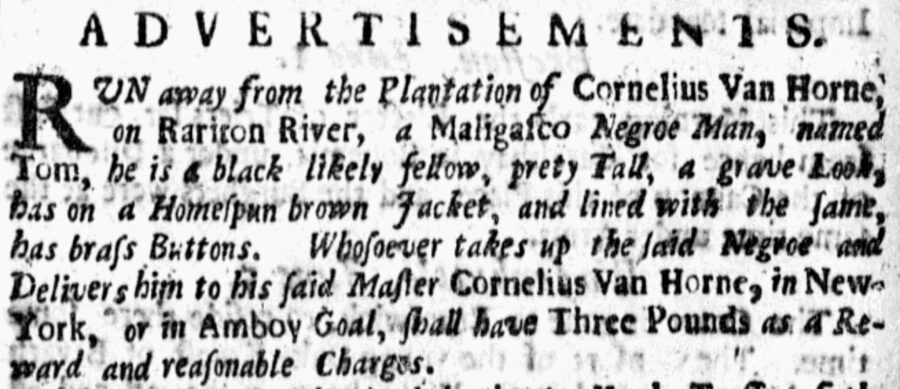
    Runaway ad in The American Weekly Mercury, September 19, 1724 about enslaved servant Tom

    When Cornelius Van Horne and his wife Elisabeth were assigned their half of the estate in 1722–with the Raritan church at walking distance from their home–Gronniosaw was about seventeen years old. We do not know when he was purchased by Van Horne and how long he worked for the family before he was bought by Frelinghuysen, sometime in the 1720s. But Gronniosaw, who served in the house and not in the fields, may very well have known Tom, the tall Black man with the “grave look,” who according to the above ad that Cornelius van Horne placed in September 1724 ran away from the plantation that month.

    Emotionally attached to the Frelinghuysen family, however, Gronniosaw would make very different choices, as will be seen in our following blog post “Updates about Ukawsaw Gronniosaw. Part 2: Frelinghuysen’s convert.”

    With thanks to retired librarian, poet, and professional genealogist Sharon Olson, for verifying this Cornelius Van Horne is the young merchant who purchased Gronniosaw (possibly through his father Jan) and  sold Gronniosaw to Frelinghuysen. Sharon is the author of ‘The Early Sandford Family in New Jersey Revisited,’ a series of nine articles in The Genealogical Magazine of New Jersey. (2016-2019)

    Further Reading

    Cooper, Nathalie F. “New Insights Into Old Places, “Kells Hall,” “Phills Hall,” and the Janeway and Broughton Store.” Somerset County Historical Quarterly 1882-1982 commemorative issue, (1982): 3-12

    Hanley, Ryan. “Calvinism, Proslavery and James Albert Ukawsaw Gronniosaw.” Slavery & Abolition 36, no. 1 (2015): 360-381.

    Matthews, Christopher, The Black Freedom Struggle in Northern New Jersey, 1613-1860, an illustrated essay in six parts


  • New and Notable: The Dirt Club

    Facebooktwitterredditpinterestlinkedinmail

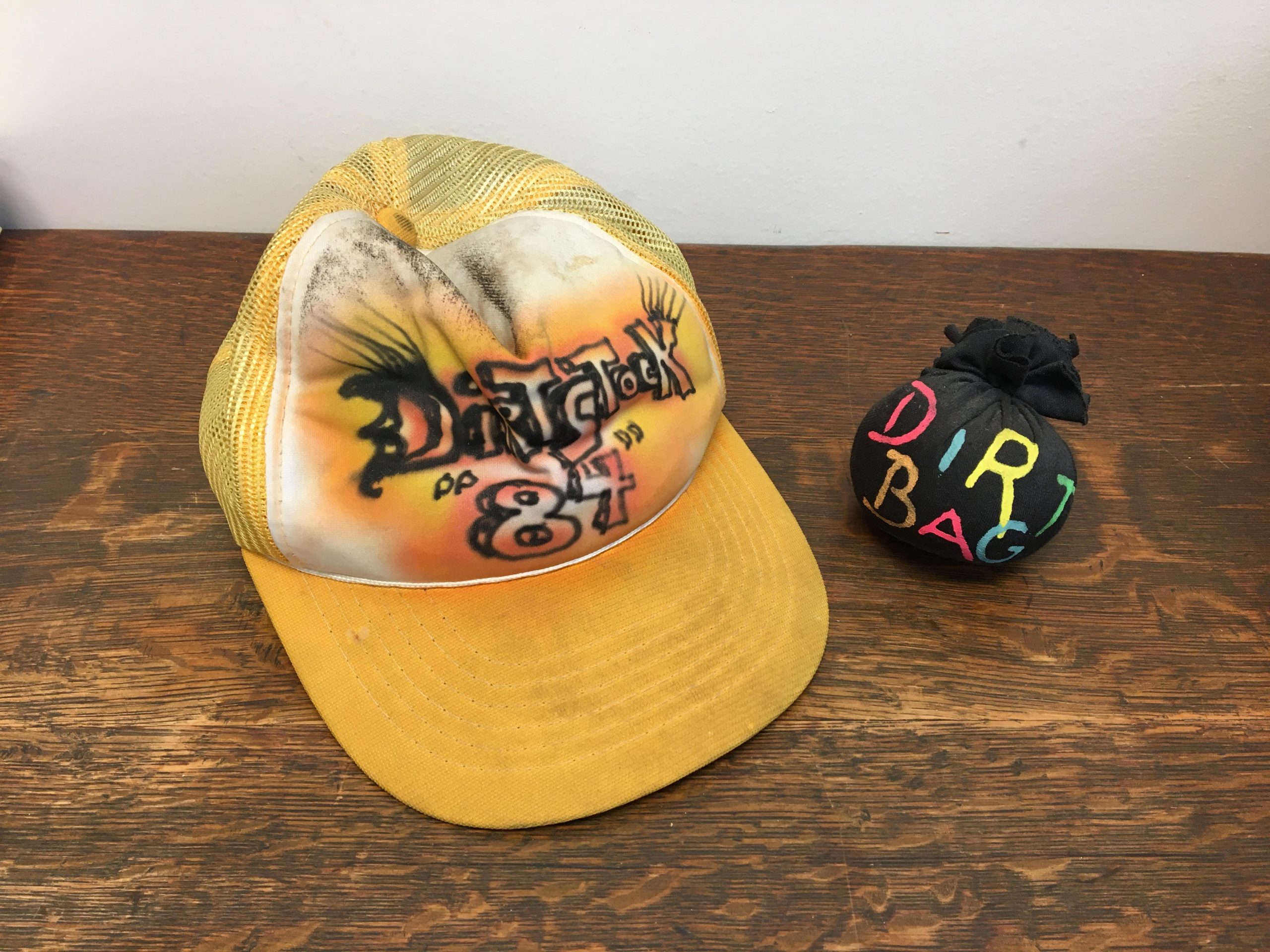
    Former Star-Ledger reporter Guy Sterling recently dropped by to donate his collection on Bloomfield’s legendary Dirt Club and share memories of his late friend, colorful owner John “Johnny Dirt” Schroeder. From 1979 to 1991 The Dirt Club hosted a plethora of local and nationally known punk, hardcore, power pop and experimental bands, held events like the Slime Festival on the Passaic, and sponsored compilation albums that included bands that played at the Dirt Club. Among the many New Jersey bands who played the club are The Smithereens, Adrenalin O.D., and Dramarama. National acts who performed there include The Fall, the Modern Lovers, and Wall of Voodoo.     

    Guy donated vinyl comps, live recordings on cassette, posters, photos, a scrapbook and more. Among the most unique items in the collection are the club’s famous “dirt bags,” literal bags of dirt that could be purchased at the bar.

    We’re thrilled to make a home for the Guy Sterling Collection on the Dirt Club, which complements the New Brunswick Music Scene Archive and the many books, periodicals, and zines we have on music and venues in New Jersey in the Sinclair New Jersey Collection. The collection is currently being processed and in due time will be available to peruse in our reading room.

    Sources:

    McCall, Tris. “Remembering Johnny Dirt, the down-to-earth king of the Jersey pop underground.” Inside Jersey, September 23, 2011. https://www.nj.com/entertainment/music/2011/09/remembering_johnny_dirt_the_do.html?fbclid=IwAR2g26r1bpkzuty3sYEq4Lr_J2p01Nd6CeOrSnseblon344l6dGwi8-7JG8

  • In defense of wallpaper: an exploration of nineteenth century design and the whitewashing of modern aesthetics

    Facebooktwitterredditpinterestlinkedinmail

    By Louise Lo Bello

    The Ghost of Wallpaper’s Past

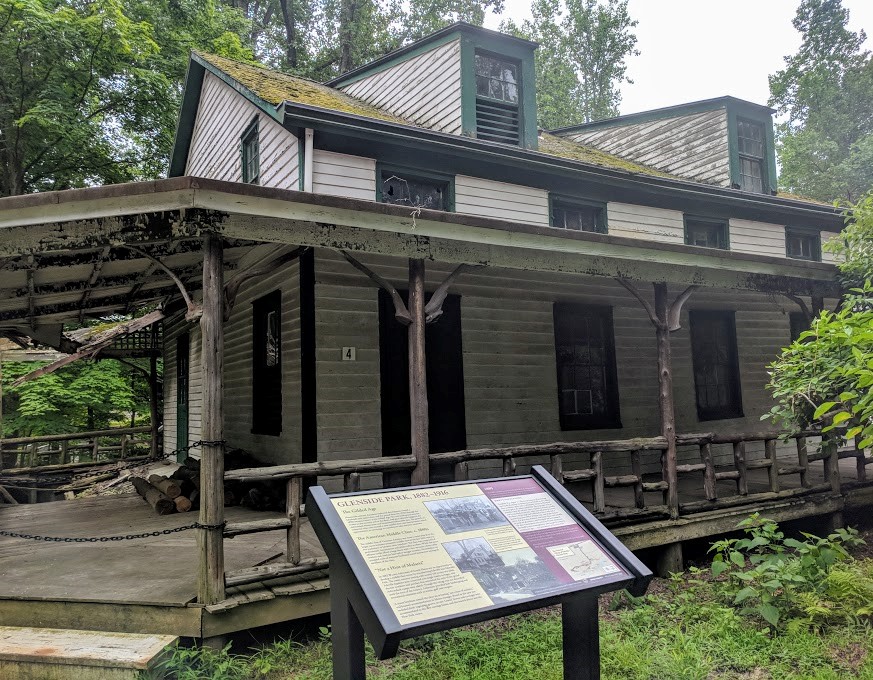
    The other day I was strolling through the trails of Watchung Reservation when I stumbled upon the “Deserted Village”, a ghost-town deep in the woods of Watchung Reservation and currently maintained by the Union County Park System. The history of the village goes something like this: In the eighteenth century, Peter Willcocks settled on the area and used the land for his sawmill and farm which later turned into the print-making town of Feltville. In the late ninetheenth century, the skeleton of Feltville was transformed into a summer resort called Glenside Park. The tenement-like apartment buildings of Feltville were repurposed as luxury cabins for the resort and their wooden corpses still remain in the woods of Watchung Reservation.

    In between smacking away mosquitoes, I tiptoed over the crumbling porch of one of Glenside Park’s converted cottages to get a closer look. I peered through a dusty window and managed to get a glimpse of the interior. As expected, there wasn’t much to see: An empty parlor with splintering floorboards, a central hearth with a paint-chipped, chalky white mantel, and my personal favorite, faded sage paisley wallpaper. A friend of mine commented, “I don’t believe in ghosts, but this place is definitely haunted.” A warranted response, but I envisioned what the cottage once was: A cozy place to return to for a few nineteeth century middle class vacationers after a long day out in nature. I laughed imagining how a rustic escape to the wilderness for Victorians still involved wearing long, heavy dresses and returning to a charming wallpapered cottage, sealed off from the elements. I kicked a mosquito off of my exposed left leg, smearing mud in the process.

    Abandoned Glenside Park cottage in the Deserted Village, Watchung Reservation

    I’ve been thinking about the solemn, cozy mood of that aging old parlor in the woods. What stood out to me most was the faded wallpaper that was completely torn off in spots and starting to peel in others, but for those who used the parlor over 100 years ago, it must have perfectly complimented the natural color palette of the outdoors. Nineteenth century design did not hold back from pattern and clutter and I expect that this aged wallpaper once played an important role in the overall experience of vacationing at the resort.

    The Janeway Wallpaper Businesses: New Brunswick, NJ

    A few months before my Deserted Village adventure, I received a reference inquiry at Rutgers Special Collections and University Archives from Bo Sullivan, antique wallpaper enthusiast and founder of Arcalus Period Design and Bolling & Co. He was working with a client who was in the process of renovating a historic house in Ohio. During the project, they came across remnants of antique wallpaper that was still stuck to the original wall. In a corner of the wallpaper it said “Janeway,” referring to a New Brunswick wallpaper company operating in the nineteenth and early twentieth centuries. In an effort to restore the room to its original design, the renovation group and Bo contacted Rutgers SC/UA looking for wallpaper samples from Janeway & Carpender from the late 1800s, hoping to find a match. So I began my search. In the process, I developed a brief timeline of the Janeway wallpaper history of New Brunswick.

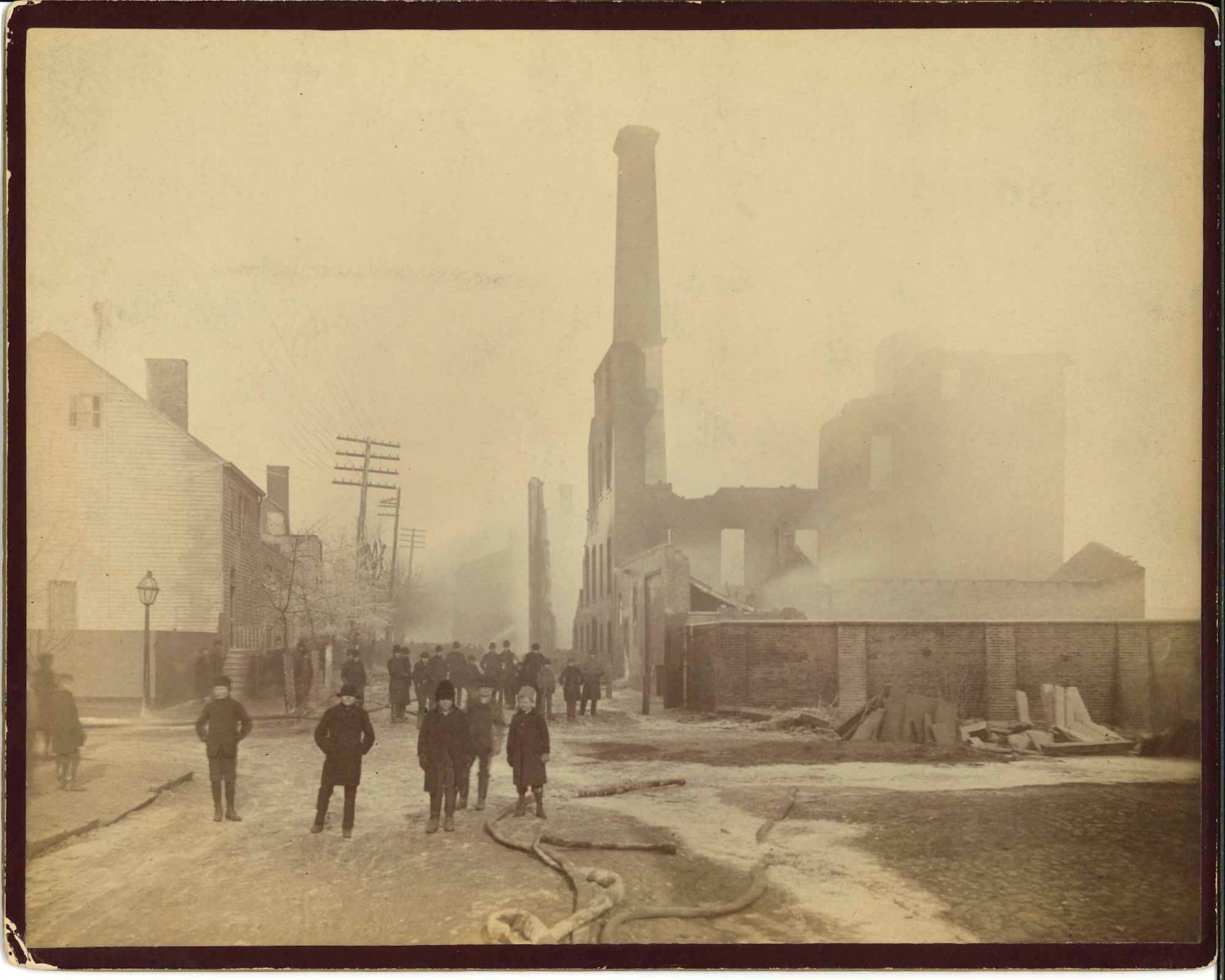
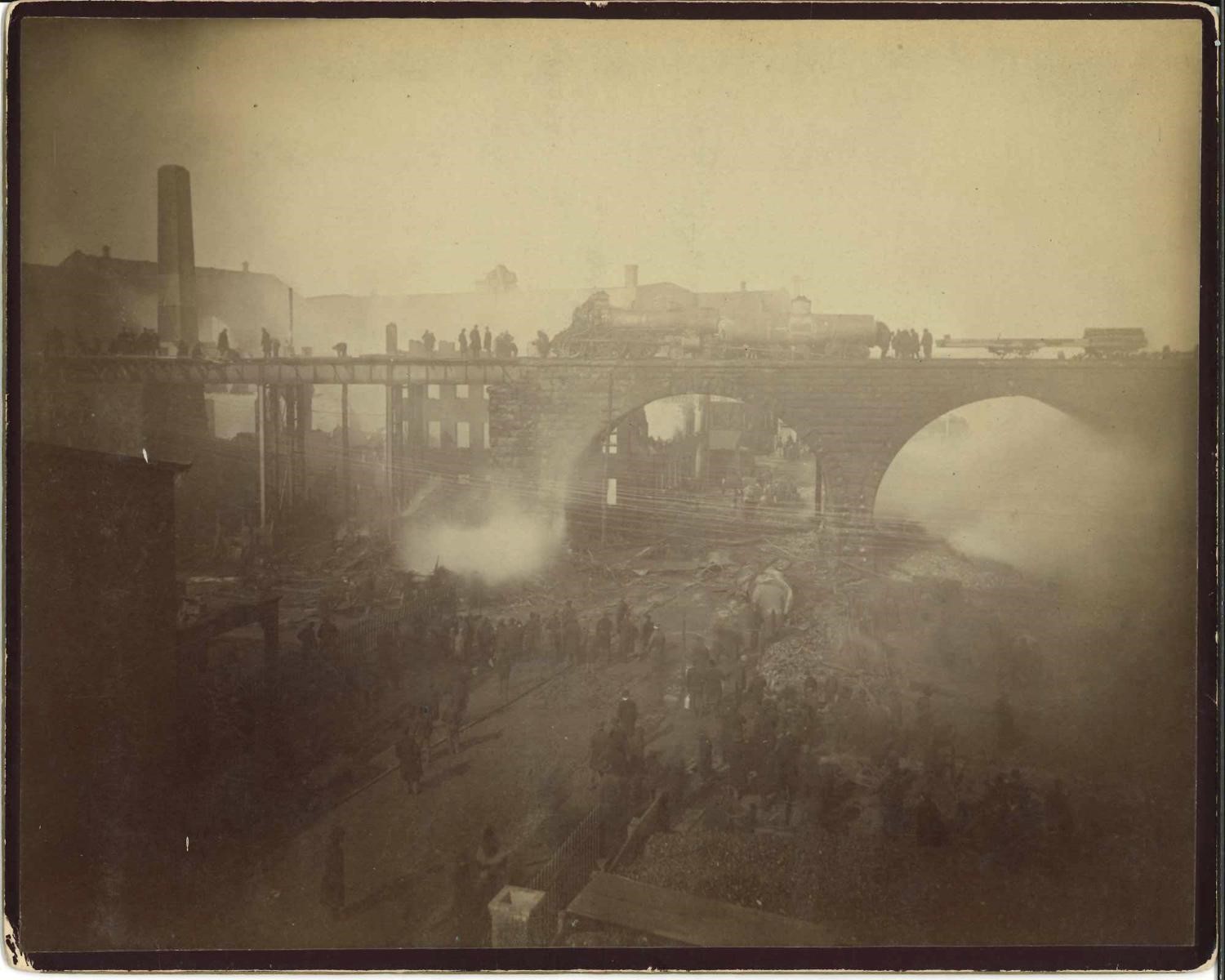
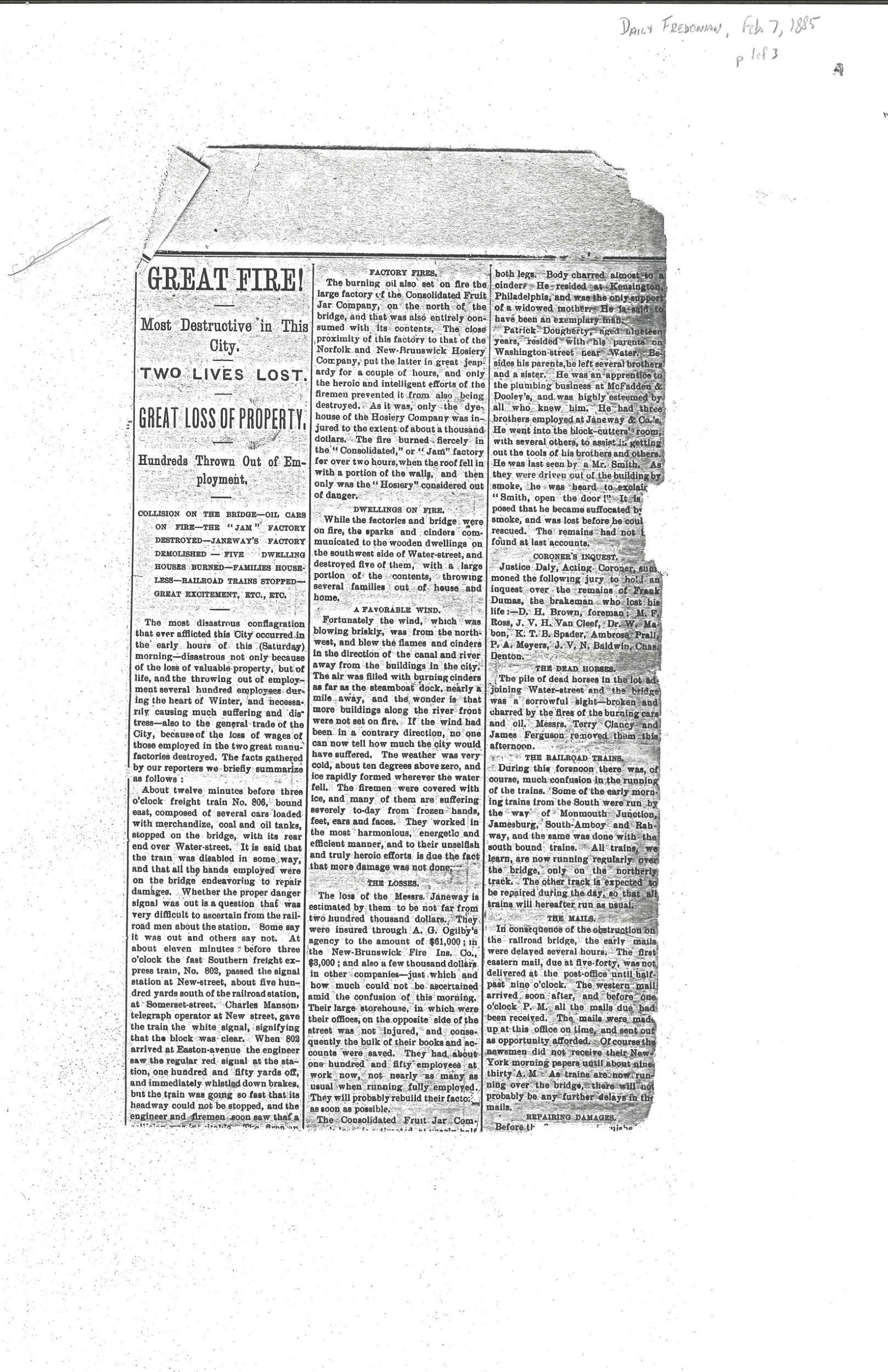
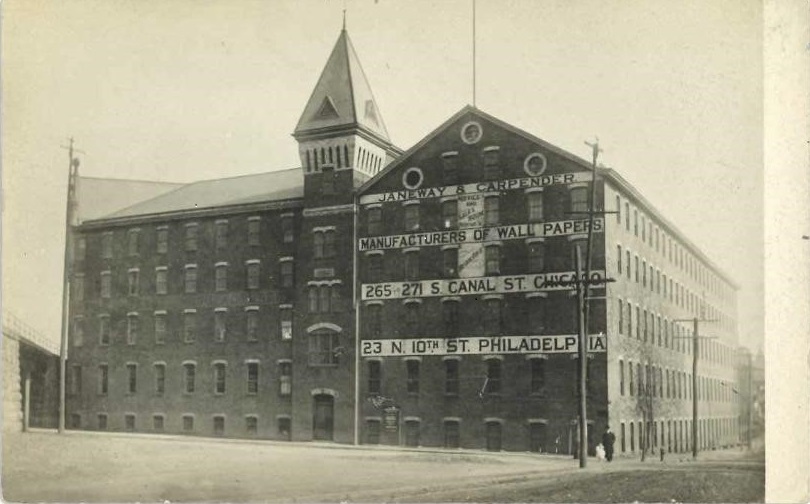
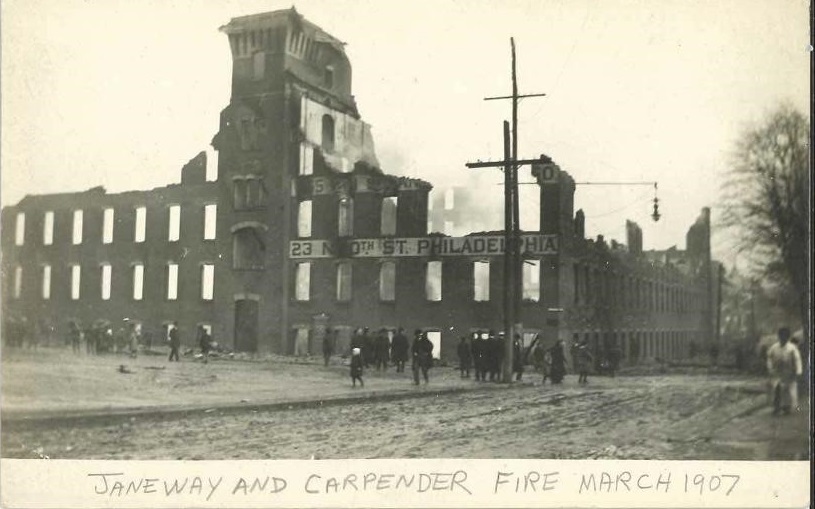
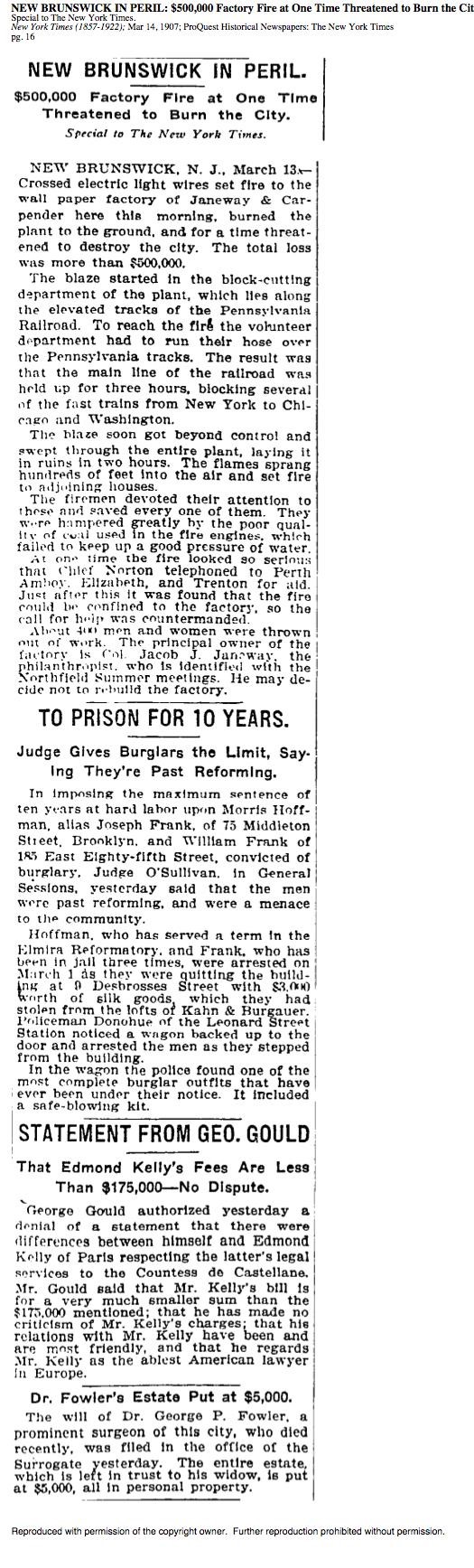
    Janeway & Company, one of the oldest American wallpaper companies, was founded in 1844 and prospered until 1914 when William Janeway, head of the business, decided to retire. The factory was located on Water Street in New Brunswick, right along the Raritan River. In the early hours of February 7, 1885, two freight trains carrying oil collided on the bridge over Water Street. It ignited a series of fires in the area, including the Janeway & Company factory which was completely destroyed. The company eventually rebuilt and relocated to a stronger structure nearby. Jacob J. Janeway, of another branch of the Janeway family tree, worked at Janeway & Company from 1865 to 1872. He then partnered with Charles J. Carpender to develop Janeway & Carpender, based in New Brunswick. Jacob Janeway eventually bought out Carpender’s shares and the company continued to thrive well into the 1900s. Janeway & Carpender had factory buildings in the areas of Paterson, Schuyler, and Church Streets in New Brunswick and eventually expanded to Chicago and Philadelphia. They too, suffered the effects of a destructive electrical fire in 1907. Within two hours, the factory burned to the ground and for a year following, the site was reportedly still smoldering. The company built a new factory across the Raritan in Highland Park and at the time, it was the largest wallpaper wallpaper factory in the country.

    Newspaper clipping and photographs of the 1885 fire and the damage to Janeway & Co. factory (New Jersey Views and New Brunswick Vertical File):


    Before and after the 1907 fire of Janeway & Carpender (New Jersey Views and New Brunswick Vertical File):


    Wallpaper and Design

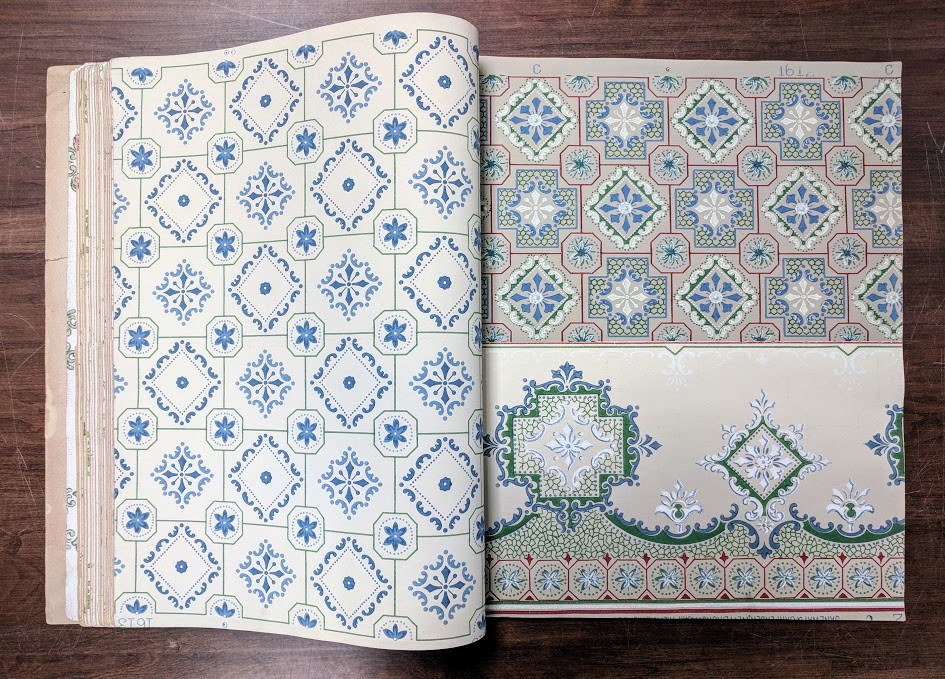
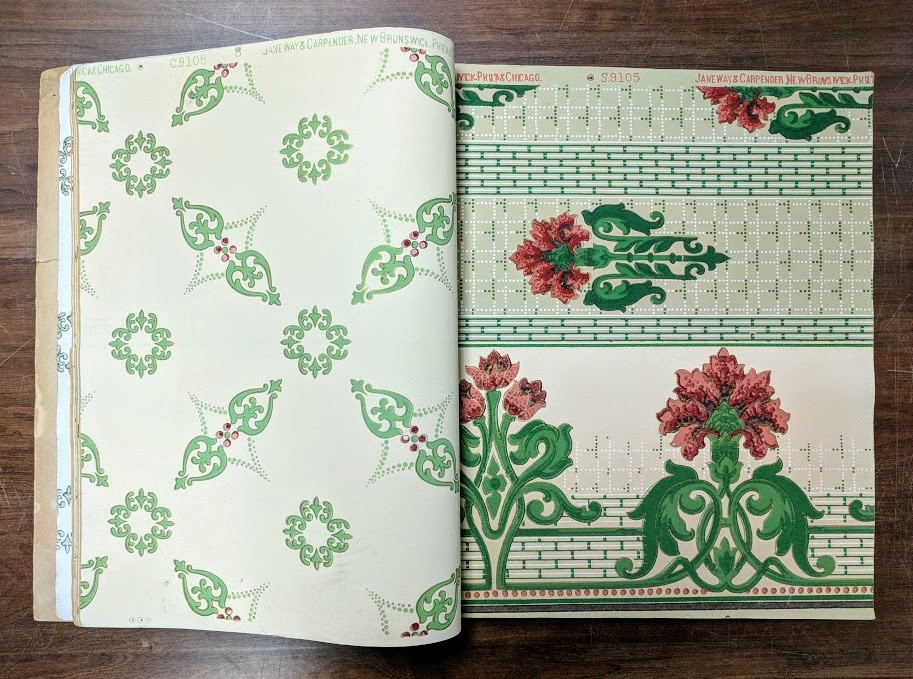
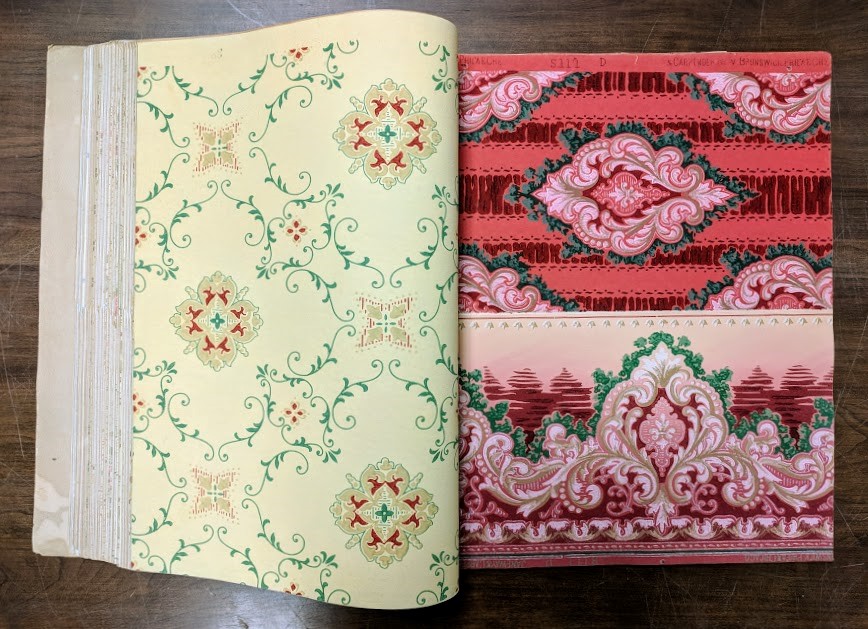
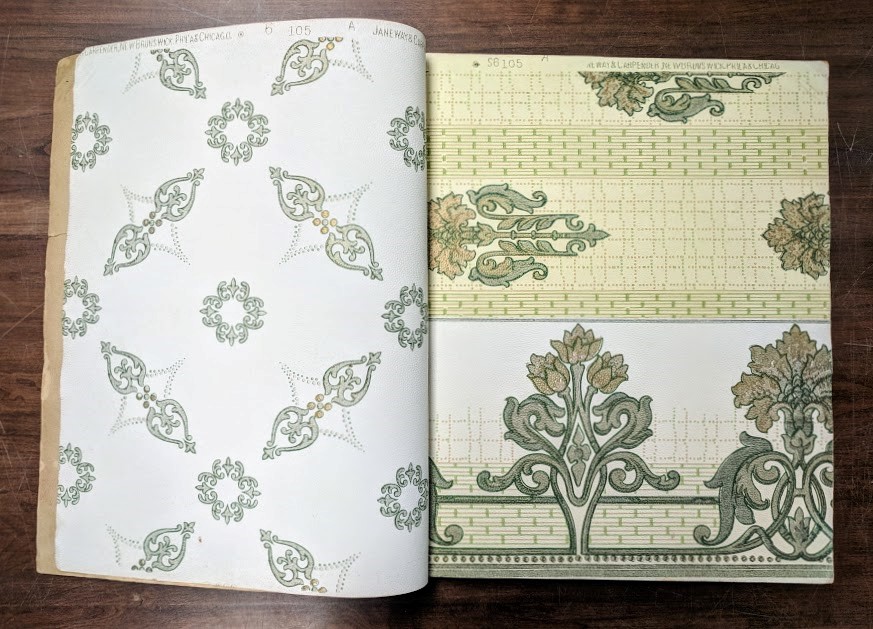
    Amidst my research, I came across a few beautiful 1911 sample books from Janeway & Carpender in the Sinclair New Jersey Collection. They all include a trifecta of a border with coordinating backdrop wallpaper and ceiling pattern. The designs varied from page to page, but what stood out to me the most was the richness of the colors and the bold design. For example, some of the vibrant red and green patterns were shockingly intense. I questioned why nineteenth century folks sought for their rooms to look like Christmas just exploded all over their walls, but after awhile the Christmas-couture look started to grow on me. In fact, all of the pages were absolutely stunning. I thanked the wallpaper gods that they were not lost in a papery flame, since tragic fires seemed to be a trend for New Brunswick wallpaper factories.

    All wallpaper samples from the Janeway & Carpender Express Books.

    Although the sample books in the collection unfortunately did not reveal a perfect match in design to the found samples in the historic house, they did pique my curiosity into nineteenth century wallpaper culture. What were the social implications of wallpaper? How did it compare to the other decorative arts during the period? And why is it no longer an interior design staple?

    Prior to the early nineteenth century when wallpaper began to stick its patterned tendrils onto the walls of Western middle-class homes, it was not very popular. In contrast, Eastern countries had been using patterned rice paper as wall decoration for quite some time. In the West, wallpaper was generally associated with lack of wealth, imitation, and falsity. After all, if you intended to decorate your walls, why not go for a richly embroidered tapestry made of a fabulously expensive material? A true mark of high taste was the real, authentic thing and wallpaper was an imposter material, trying to be like its cooler, richer cousin. I can’t help but think of the tacky imitation-marble wallpaper that currently lines the bathroom walls of my family home and how it pathetically hangs off of the wall in places, like a child’s Halloween costume after a long night of trick-or-treating.

    The Industrial Revolution gave rise to a fresh crop of laborers that operated new machinery. This led to an improved economy and a rising middle class in the mid-nineteenth century. As the economic classes became much less disparate, more people could acquire art and décor and experiment with interior design moreso than even before, igniting a consumerist boom. Additionally, the development of machine printing and a repealed tax on paper products allowed for folks to more readily choose to decorate their homes with wallpaper, a more affordable option than expensive fabrics and tapestries.


    The Aesthetic and Arts and Crafts Movements in the latter half of the nineteenth century pushed back against industrialization and mass produced goods, emphasizing an “art for art’s sake” mentality. Designers like William Morris and C.F.A. Voysey were important figures in these movements, looking to non-Western countries and nature for design inspiration and abstracting traditional imagery into two-dimensional patterns. They also encouraged slower, handmade techniques of production such as block printing, as seen in Japanese prints. This non-Western influence also spurred collectors to purchase exotic pieces of furniture and other ornamental objects to decorate their homes.

    The Deserted Village serves as a useful microcosm of the social and economic change over a few centuries of American history. Its humble beginnings as a farm and sawmill turned industrial factory town in the mid 1800s, and then, as if the spirit of William Morris himself breathed through the village, rebelled against the industrialized lifestyle and transformed into a summer resort, looking back to nature.

    Less is (not always) more

    Over the last century, the use of wallpaper has decreased in popularity. Design trends have shifted toward minimalism with white or neutral colored walls, glass panels, and a few quirky or “exotic” statement pieces. In my opinion, a general algorithm for any trendy interior includes whitewashed walls, an Eastern inspired tapestry (perhaps featuring a mandala or a hamsa) hanging loosely over a mid-century modern style sleek couch, complete with a lush green plant on the floor, for what I can only guess is to add some sign of life to the staleness of the space. I like to call this aesthetic the “blogger home”. Minimalism with a pop of color or texture and an interesting handmade basket from your most recent trip to South Africa makes for great Instagram content. In other words, it increases your social capital.

    Image from Unsplash (https://unsplash.com)

    It is no new critique that a highly decorated Victorian household could be reflective of a colonizing worldview. Hand-picked trinkets and souvenirs from various countries and cultures were used to elevate one’s social status by appropriating them as their own. In many ways not much has changed in today’s design style. An interesting perspective on this whitewashed aesthetic is that it reflects something specifically tied to white-Americans. Young, professional hipsters are most often displayed in the media with quirkily decorated white-walled homes. Indeed, this style is not just centralized to American home design (the Scandinavians and Moroccans are just some of those who have been doing it for much longer), but there is still something to say about the bleaching of tonality and pattern, speckled with interesting trinkets to add a little “culture” to a home. In many ways, the only difference between some of today’s interiors and a Victorian interior is that the walls have now been scrubbed clean. Maybe we can learn something from the evolution of interior design, that evolution does not necessarily imply improvement.

    Despite my criticism of this aesthetic, I acknowledge the benefits. White walls reflect light and help make a space look larger. They also allow for people to focus on beautiful objects and decorative pieces and allows them to move more easily without the risk of clashing with wall design. However, not all hope is lost on the wallpaper front as there seems to be a slow shift of reintroducing wallpaper into homes as accent walls. Rather than using it as a backdrop, wallpaper is now a point of focus in a room. And maybe this is what interior design needs. Nineteenth century wallpaper companies like Janeway & Carpender and designers like Morris and Voysey considered their product not merely as a cheap decorative backdrop, but as a work of art. Perhaps now, after the rise and fall of its popularity, the value of wallpaper can once again be elevated and provide a much needed element of mood and character to a room.

    Where is our Glenside Park window into wallpaper history?

    Looking to the design styles of the past can reveal a lot about the environment and people of a certain era. It is therefore important to maintain a record of the decorative arts, but wallpaper tends to present a preservation issue. Its very nature is ephemeral, discrete enough to be painted over or scraped off when one grows tired of it. It is easily damaged, stained, defaced, and replaced. Not many records of the wallpaper still remain, and if they do, they might be peeling off the walls of an abandoned summer resort in Union County, NJ, a historic house in Ohio, and even in my parent’s bathroom. In other cases, wallpaper preservation can be much more deadly. Some nineteenth century wallpapers were known to use pigments traced with arsenic, particularly the color green. One such book owned by Michigan State University has been practically shrink-wrapped by cautious librarians to prevent people from directly coming in contact with the arsenic-laden pages. Well-preserved wallpaper sample books are not only fantastically entertaining to flip through but they are brilliant artifacts of varying aesthetics, social changes, economic disparities, and personal preference across a period of time.

    If you are interested in looking at the Janeway & Carpender wallpaper books at Rutgers Special Collections or learning more about the companies, you can search our holdings and Sinclair New Jersey Collection in the EAD finding aids, and contact the reference desk with any questions.

    Resources:

    Arcalus Period Design. http://arcalus.com

    Bolling & Co. https://bollingco.com

    Deserted Village, Union County, NJ. http://ucnj.org/parks-recreation/deserted-village/

    Manufacturers’ Association of New Jersey. (1919). Manufacturers’ Association bulletin. Manufacturers’ Association of New Jersey. Retrieved from http://hdl.handle.net/2027/uiug.30112064282780

    New Brunswick File Collection. NJ014. Special Collections and University Archives, Rutgers University. http://www2.scc.rutgers.edu/ead/snjc/nbverticalfileb.html

    New Jersey Trade and Manufacturers’ Catalog Collection. NJ009. Special Collections and University Archives, Rutgers University Libraries.

    Scannell’s New Jersey’s first citizens and state guide. (n.d.). Paterson, N.J.: J.J. Scannell,.

    Bonney, Grace. The White Wall Contraversy: How the All-White Aesthetic Has Affected Design. http://www.designsponge.com/2016/05/the-white-wall-controversy-how-the-all-white-aesthetic-has-affected-design.html

    Victoria and Albert Museum. A Short History of Wallpaper. http://www.vam.ac.uk/content/articles/a/short-introductory-history-of-wallpaper/

    Zawacki, Alexander J. (2018). How a Library Handles a Rare and Deadly Book of Wallpaper Samples. https://www.atlasobscura.com/articles/shadows-from-the-walls-of-death-book


  • Richard Mutt

    Facebooktwitterredditpinterestlinkedinmail

    By Stephanie Crawford

    Over the past two months, I have been conversing with Dr. Glyn Thompson, a retired art history professor from Leeds University, in regards to our holding of early twentieth-century pottery company trade catalogs in the Sinclair New Jersey Collection. His research question is a fascinating one: Did Marcel Duchamp create the iconic 1917 ready-made Fountain? Dr. Thompson argues that Baroness Elsa von Freytag-Loringhoven was the creator of Fountain by supporting a counter narrative of the creation of one of the most important works of art in the twentieth century.

    The art history Fountain myth goes like this:

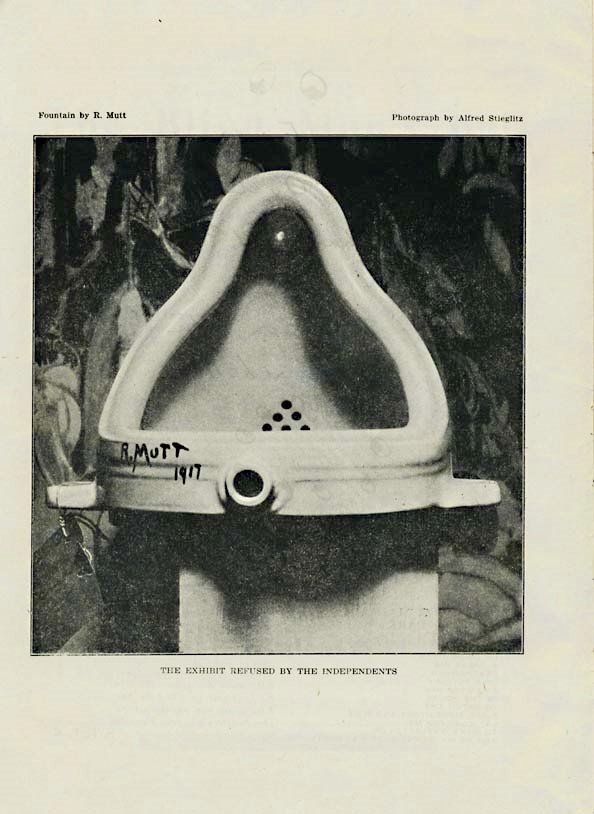
    Duchamp began creating ready-mades in 1913, when he chose a spinning bicycle wheel as a work of art. Ready-mades are just as they sound: commercially manufactured everyday items. Part of the allure of the ready-made is in the artistic choice of the object; the other is in the reading of the form in an attempt to find meaning. In 1917 Duchamp bought a urinal from the J. L. Mott Pottery Company which had a showroom in the Upper West Side. He turned the urinal on its side, and signed it “R Mutt 1917”. R Mutt, or the full Richard Mutt, is a word play on the name Mott and also the cartoon characters Mutt and Jeff. Duchamp then submitted the urinal to the annual exhibition of the Society of Independent Artists, of which he was a member. The society was formed by artists who were subverting the typical exhibition favoritism of other art clubs by accepting anything that an artist submitted. Artworks were to be hung/displayed alphabetically. Duchamp challenged the society’s liberal take on art and artists, pushing to see if they would accept anything as a work of art. Members of the society were appalled by the submission, and refused to display it, hiding the urinal in a back room. After the exhibition, Duchamp resigned from the society because of the conservatism. Alfred Stieglitz photographed the urinal at Gallery 291 and ultimately the original urinal was lost.

    With Fountain, Duchamp was pushing the boundaries of the definition of art and authorship in asking questions like: “What is a work of art? Who gets to decide, the artist or the critic? Can a work derive from an idea alone, or does it require the hand of a maker? These questions strike at the core of our understanding of art itself.” Is it art because it’s made by an artist? What is the difference between a tea cup and a sculpture that looks like a tea cup? Why are functional items not art?

    Figure 1 Attributed to Marcel Duchamp. The Fountain, 1917. Photographed by Alfred Stieglitz, 1917. Background is Marsden Hartley’s The Warriors. Image from Wikimedia Commons.

    Other than several articles published in Blind Man issue number 2 from 1917, there was little to nothing published about the urinal, including the identity of Richard Mutt. In the 1950s and 1960s Duchamp took credit for, and authorized replicas to be made of The Fountain. This art history narrative of the creation and eventual attribution of Fountain to Duchamp serves to fuel the status of Duchamp as a misunderstood, avant-garde genius whose whole life was art, creating this myth and mythical artist that has ignored facts and obvious faults.

    But it doesn’t seem to matter to art history if Duchamp created Fountain. Stated rather succinctly in a 2017 Artsy article: “But to try and establish the true authorship of the Fountain is exactly the kind of quixotic undertaking that would have had Duchamp in stitches. Let’s take a moment to recall that Monsieur Duchamp took a urinal, turned it upside down, signed it ‘R. Mutt,’ and submitted it to a salon; the pursuit of truth was decidedly not his quest.” Ignoring the questionable authorship of one of the most important artworks of the twentieth century because Duchamp is your favorite artist is a quixotic and fundamental misunderstanding of the intersection of feminism and art history. I’m willing to look past Joseph Beuys’ lies about his origin story in order to see his artistic merit because at least his ideas were original. Women artists deserve more than to be regulated as the kooky sidekicks, the sexy muses, or the martyred wives whose work gets stolen by their male counter-parts. Why is Marcel Duchamp a genius and Elsa a kook?

    The evidence that Fountain was chosen and submitted by Marcel Duchamp is largely based on statements made by Duchamp in the 1950s and 1960s. Dr. Glyn Thompson is attempting to interrupt the Artist-as-genius narrative with his research into the Trenton Pottery Company. The counter-narrative he produces is a convincing argument that one of the greatest works of art was, in fact, created by a woman. More information can be found in Thompson’s eBook Duchamp’s Urinal? The Facts Behind the Façade.

    The following are Thompson’s core arguments:

    1.) In a 1917 letter to his sister, Suzanne Duchamp, Marcel writes:

    “April II [1917] My dear Suzanne- Impossible to write- I heard from Crotti that you were working hard. Tell me what you are making and if it’s not too difficult to send. Perhaps, I could have a show of your work in the month of October or November-next-here. But tell me what you are making- Tell this detail to the family: The Independents have opened here with immense success. One of my female friends under a masculine pseudonym, Richard Mutt, sent in a porcelain urinal as a sculpture it was not at all indecent-no reason for refusing it. The committee has decided to refuse to show this thing. I have handed in my resignation and it will be a bit of gossip of some value in New York- I would like to have a special exhibition of the people who were refused at the Independents-but that would be a redundancy! And the urinal would have been lonely- See you soon, Affect. Marcel”[emphasis mine]

    The letter is translated and published in Francis Naumann’s 1982 article, though Thompson observes that in footnote 18 Naumann is confused as to why Duchamp would write about this woman friend, refusing to acknowledge that it may be true. The letter is housed in Jean Crotti’s Papers at the Smithsonian Archives of American Art.

    2.) Duchamp could not have purchased the urinal from J. L. Mott Pottery Company because

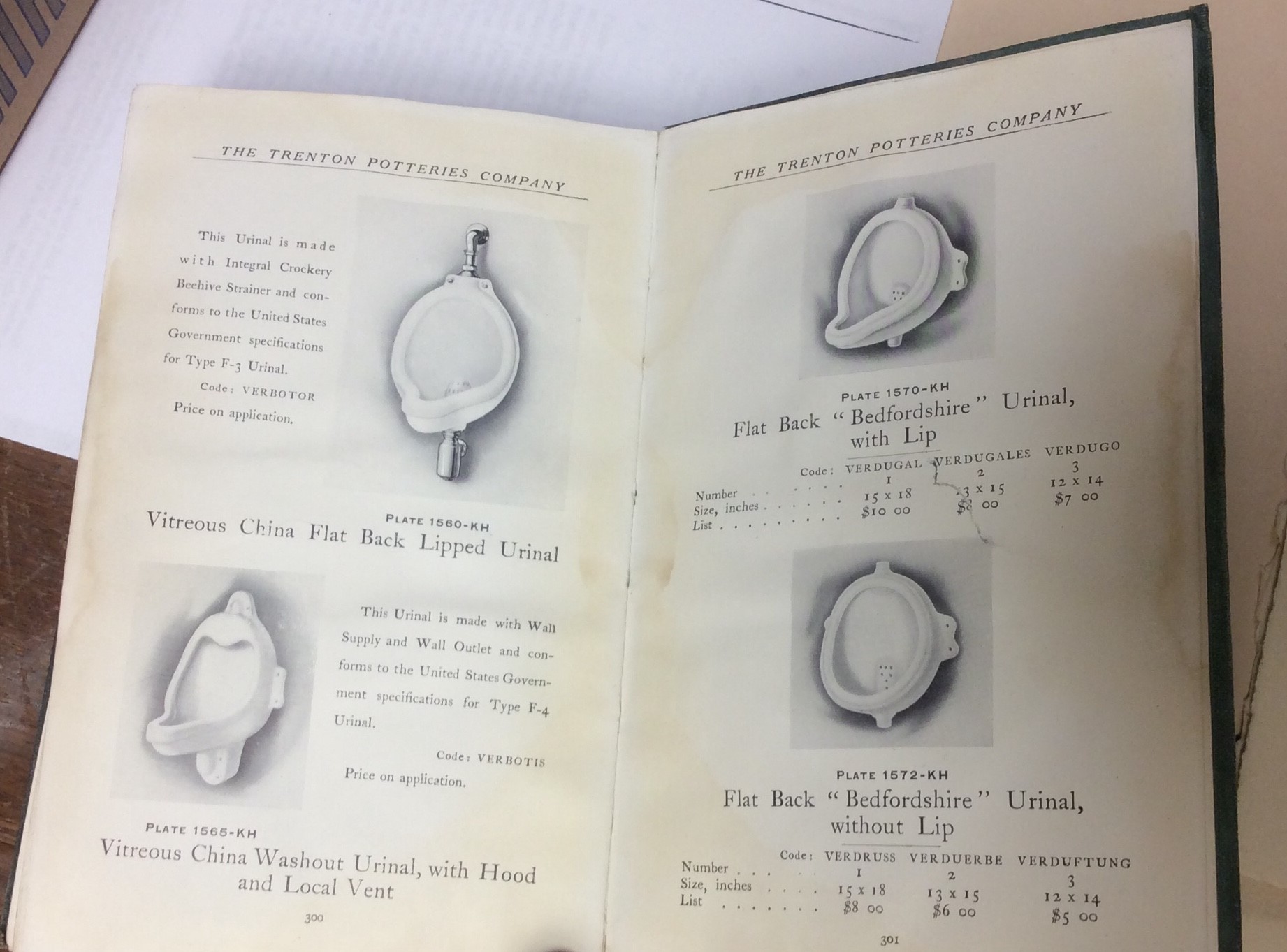
    a. You couldn’t just walk in and purchase a urinal from their showroom in New York. You needed a tradesman to be the moderator between you and the company (a practice that is similar today). Additionally, the urinal itself would have been made in and purchased in Trenton, New Jersey, where the factory was. These protocols can be found in the company’s trade catalogs.

    b. Mott didn’t make a urinal similar enough to the 1917 image of the urinal.

    c. Therefore, the name R. Mutt couldn’t have come from J. L. Mott Company.

    Figure 2 Pages from Trenton Potteries Company Catalog, 1910.

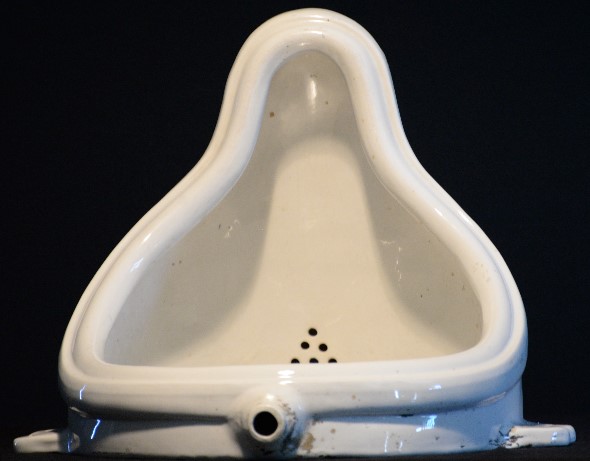
    3.) The Trenton Potteries Company created the Vitreous China, Bedfordshire No. 1 Flat Backed Lipped Urinal between 1915 and 1921 and it visually matches the Stieglitz photograph of Fountain. This is confirmed both through trade catalogs, and the urinal that is in Glyn Thompson’s personal collection.

    Figure 3 Trenton Potteries Company Vitreous China Figure 3 “Bedfordshire” No. 1, Flat Back, Lipped Urinal. Coll. Dr Glyn Thompson.

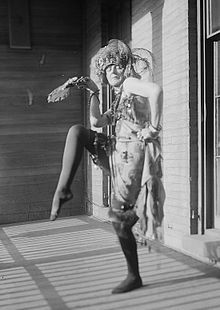
    4.) Baroness Elsa von Freytag-Loringhoven was a German-born Dada artist living in Philadelphia who was one of the only women who could have created Fountain.

    5.) R. Mutt is a Dada play of words on the German word “armut” which translates to poverty or destitution. Poverty of morality was a possible theme of the urinal since on April 6, 1917 the United States declared war on Germany. On April 9th, the urinal reached the exhibition. Also on April 6th, regulations were passed to control movements of German-born individuals on U.S. soil.

    Figure 4 Baroness Elsa von Freytag-Loringhoven. Image via Wikimedia Commons.

    It’s difficult to prove without a doubt that Elsa submitted the urinal, choosing it to be a work of art. My initial reaction was, and continues to be: of course she did. Because Elsa WAS Dada. She was Art. She once wore postage stamps as makeup, a birdcage around her neck, and carpet sample rings as bracelets. When she showed up to be George Biddle’s model, she removed her jacket revealing these everyday items and he was shocked. Pictures of her in simple Google searches show a woman making strange gestures and poses for the camera. While Dada performances were meant to make the bourgeois uncomfortable, Elsa made everyone uncomfortable all of the time.

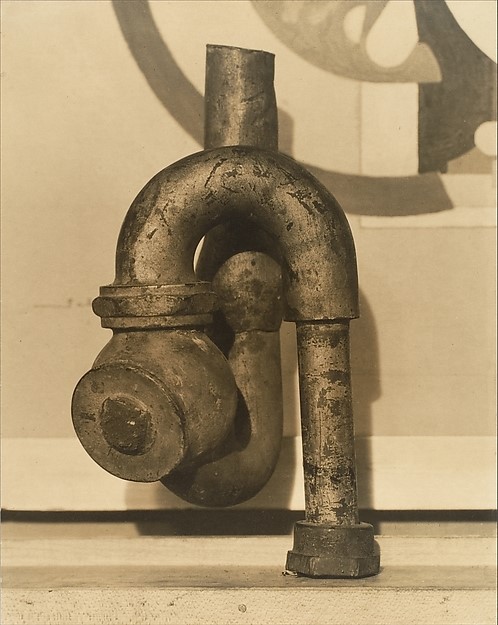
    And then there’s God (1917). Previously attributed to Morton Schamburg, God is composed of a twisted drainpipe secured onto a miter box. Readings of the work are tenuous at best, but I like to think that God symbolizes the impotence and mediocrity of “important” men.

    Figure 5 Elsa von Fretag-Loringhoven, God, 1917, readymade. Image from Wikimedia Commons.

    Additionally, her poem Astride mimics an orgasm, the climax in a flurry of nonsense words:

    “Saddling
    Up
    From
    Fir
    Nightbrimmed
    Clinkstirrupchink!
    Silverbugle
    Copperrimmed
    Keening
    Heathbound
    Roves
    Moon
    Pink
    Straddling
    Neighing
    Stallion :
    “HUEESSUEESSUEESSSOOO
    HYEEEEEE PRUSH
    HEE HEE HEEEEEEAAA
    OCHKZPNJRPRRRR

    / \
    HÜÜ HÜÜÜÜÜÜ
    HÜ-HÜ!”
    Aflush
    Brink
    Through
    Foggy
    Bog
    They
    Slink
    Sink
    Into
    Throbb
    Bated.
    Hush
    Falls
    Stiffling
    Shill
    Crickets
    Shrill
    Bullfrog
    Squalls
    Inflated
    Bark
    Riding
    Moon’s
    Mica –
    Groin
    Strident!

    Hark!

    Stallion
    Whinny’s
    In
    Thickets.

    EvFL”

    It is not a stretch then, to think that the Baroness would choose a urinal to send to the Independents exhibition: she used everyday objects in her art, she was keen on word play and bodily functions, and she used herself and her art to make people uncomfortable.

    But Elsa tends to get a bad rap. She is often described as: “eccentric”, “crazy”, “visionary”, “strange” and “outrageous”. Like the cult of Frida Kahlo, the Baroness’ sexual exploits and her life take larger precedent than her work: a subheading to a Timeline article states “Elsa von Freytag-Loringhoven was once arrested for walking down Fifth Avenue in a men’s suit.” In comparison, H.P. Roche describes Duchamp as thus: “When I met Marcel Duchamp in New York in 1916, he was twenty nine years old and wore a halo…From 1911 to 1923 my memories of him as a person are even more alive than my recollections of his work…He was creating his own legend, a young prophet who wrote scarcely a line, but whose words would be repeated from mouth to mouth…” The comparison and hypocrisy is hardly unique to someone who studies women artists, and yet it continues to be infuriating.

    It’s doubtful that in Elsa’s archives there will be a diary entry stating “And on this day I mailed a urinal to Louise Norton to be submitted to the Society of American Artists under the name R Mutt, signifying poverty.” Even if there was a diary entry existed, I doubt that it would change peoples’ minds. She was a liar, so you can’t trust her; she was crazy so you can’t believe anything she says; she was just looking for a buck; she was taking advantage of that poor man for her own sake; and all of the other things that people say in order to discredit women who speak out about their experiences. It’s difficult to think of a way to end this post without falling into a pit of despair. Perhaps it is through Dr. Thompson’s efforts to shout into the abyss with his book, his articles, his interviews, and his exhibitions that a change for Elsa will occur. After all, an unwillingness to be quiet is one of our best feminist tools.

    ____________________________________

    [1] Dr. Glyn Thompson, Duchamp’s Urinal? The Facts Behind the Façade (Wild Pansy Press, 2015), 11-13.

    [2] Thompson, Duchamp’s Urinal?, 19, 27.

    [3] Jon Mann, “How Duchamp’s Urinal Changed Art Forever,” Artsy (May 9, 2017), https://www.artsy.net/article/artsy-editorial-duchamps-urinal-changed-art-forever (accessed May 30, 2018).

    [4] Exhibitions: Challenge and Defy, at Sidney Janis Gallery, 1950, New York. International Dada Exhibition, at Sidney Janis Gallery (15 April-9 May 1953), New York; Retrospective Dada, Dusseldorf (5 September- 19 October 1958). Interview: Text:

    [5] Jon Mann, “How Duchamp’s Urinal Changed Art Forever,” Artsy (May 9, 2017), https://www.artsy.net/article/artsy-editorial-duchamps-urinal-changed-art-forever (accessed May 30, 2018).

    [6] The answer is SEXISM.

    [7] There is nothing wrong with acknowledging the talent of certain artists, but insistence on the status of the Artist as Genius disallows criticism and unconvincingly simplifies the narrative of their life and work. In addition, modern women artists are almost never described as geniuses. See Linda Nochlin’s “Why Have There Been No Great Women Artists?” for a more succinct analysis of the rhetoric associated with male and female artists.

    [8] Francis M. Naumann,  “Affectueusement, Marcel: Ten Letters from Marcel Duchamp to Suzanne Duchamp and Jean Crotti,” Archives of American Art Journal (vol 22, no. 4 1982), 8. Written extensively by John Higgs in “The Shock of the New,” Stranger Than You Can Imagine: Making Sense of the Twentieth Century (London: Weidenfield and Nicolson, 2015), 35-51. Argued by Thompson in Duchamp’s Urinal?, 17-18.

    [9] Louise Norton could also be a potential creator of Fountain. In the Stieglitz photograph, the exhibition entry card is still attached, which lists Norton’s address as R. Mutt’s address. Additionally, she wrote an article in Blind Man about R Mutt. To my knowledge, there is no archival collection, book, or article about her art for comparison.

    [10] Thompson, Duchamp’s Urinal?, 70.

    [11] Additional questions arise, for me, from Duchamp’s story that he simply submitted the piece to the exhibition and that those in charge censored his avant-garde poke at the supposedly liberal Society. The story makes Duchamp seem like he was just a member of the art society, when in fact he played a large administrative role. According to the exhibition catalog for the 1917 exhibition, Marcel Duchamp a director of the Society, and was the director of the hanging committee (See Figures).[1] The catalog can be seen in full here.  The hanging committee included George Bellows and Rockwell Kent. Because there were no juries and no prizes in the Society, as long as the artist paid their dues then their work would be hung. In order to prevent hierarchies and favoritism, the pieces were hung alphabetically. This was a very liberal take on annual art exhibition for clubs and societies which often attempted to mark ‘the best” through juries and strategic hangings.  But how can you say that those in charge denied your readymade when you were the one who was in charge?

    [12] Higgs, “The Shock of the New,” 35.

    [13] Tanya Clement, “Poems by Baroness Elsa von Freytag-Loringhoven,” https://jacket2.org/poems/poems-baroness-elsa-von-freytag-loringhoven accessed May 30, 2018. “Papers of Elsa von Freytag-Loringhoven.” University of Maryland, https://archives.lib.umd.edu/repositories/2/resources/22 accessed May 30, 2018.

    [14] H. P. Roche, “Souvenirs of Marcel Duchamp”, in Robert Lebel, Marcel Duchamp (New York: Grove Press, Inc.)

  • Rutgers in the First World War, May and June 1918—A World in Motion

    Facebooktwitterredditpinterestlinkedinmail

    When the United States entered World War I a century ago, Rutgers transformed into a war college focused on supporting America’s war effort. Many students and alumni joined the armed forces. Earl Reed Silvers, assistant to Rutgers president William H. S. Demarest, launched the Rutgers War Service Bureau as a means to keep in touch with Rutgers men in service. The Rutgers in the First World War series features stories from the War Service Bureau correspondence, offering a window on the impact of the war on Rutgers students and alumni 100 years ago.

    At Rutgers: Baseball and Bombshells

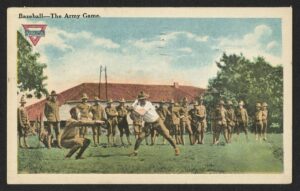
    Postcard showing men in uniform playing baseball, captioned "Baseball--the Army Game." Postcard has a YMCA--Young Men's Christian Association--logo.
    A postcard sent by Harold Faint (class of 1917) in late May 1918


    The May 1918 War Service Bureau letters to men in service brought news of baseball and commencement activities at Rutgers.  On May 20, Silvers wrote about a game taking place that afternoon.

    This afternoon we play Lafayette in baseball. . . . Johnny Lyons, our baseball captain, has gone to the Fourth Officers’ Camp; and so we’re not very optimistic about the result of the game this afternoon.

    Silvers reported that the number of graduates for the 1918 commencement was down due to men leaving Rutgers to serve. Although he was sure the previous year had 77 graduates, he stated the class of 1918 had 42 graduates in his May 20 letter, but his June 5 letter changed the number to 47 (according to the 1918 commencement program, the number should be 46). Some Rutgers men in service had returned to visit for commencement. In the May 20 letter, Silvers describes one such man bringing a souvenir:

    “Bob Searle is here in uniform from Camp Devens. He brought with him an unexploded four-inch shell and my stenographer is in deadly fear of being blown to atoms.

    In his June 5 letter, Silvers followed up on this alarming gift to reassure the men

    “That shell of Bob Searle’s which almost scared our stenographer to death wasn’t loaded, after all.”

    From the Men: The Hazards and Pleasures of Travel

    Rutgers men in service wrote to the Bureau in May and June 1918 to describe their travels overseas.

    On May 1, 1918, August Grimme (class of 1918) wrote from the north of England.

    “I am now located at a Gunnery School . . . The work is interesting and I enjoy it very much. The weather is rather uncomfortable up here. It seems almost like January. In fact we had a little snow flurry this morning.

    Reverend Maurice Kain’s (class of 1906) May 18, 1918 letter waxed poetic in its description of France (his correspondence folder does indeed contain a poem about France).

    France is remarkably colorful at this present springtime. The skylark wakes one morning. Blooming lilac hedges, surround him. Fertile fields lie beyond. But the more or less distant boom of guns, and the homing flight of flocks of airplanes tell one that farther beyond is —red war, red but glorious; or rather, glorious because red.

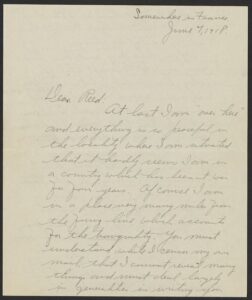
    On June 7, 1918 William P. E. Ainsworth (class of 1916) wrote of some rockiness on an otherwise calm ocean crossing to Europe,

    “The trip over was wonderful. The sea was calm and the weather beautiful all of the way, except for about two days when it blew rather rough, and, as the seas caught us sideways, the boat rocked to beat the band. It sometimes rocked so that for hours, if you were sitting on deck, you were looking alternately at the sky above and the water beneath you, and unless you braced your steamer chair you would slide, chair and all, across the deck. Many of the men were dreadfully seasick, but it did not affect me in the least; in fact, I thoroughly enjoyed it.”

    First page of handwritten letter, dated June 7, 1918, written from "Somewhere in France."
    First page of Ainsworth’s June 7, 1918 letter. Transcribed version also available.


    On June 26, 1918 Stuart M. Firth (class of 1914) described other watery travels on French soil (transcribed version also available).

    “When we marched forty two days to take over our sector, we were accompanied for the forty-eight hours by the most generous supply of rain and snow and hail that this country could give. For two solid days everyone was wet to the skin. Raincoats were not more effective than blotting paper; trench boots, guaranteed to be waterproof when bought in the States, absorbed the bountiful liquid like a sponge.”

    Despite these conditions, Firth maintained

    “not a man grumbled, there was joking and laughing up and down the whole line and plenty of good old American cussing that did your heart good to listen to.”

    [with assistance from Tara Maharjan]

    To Learn More

    The Rutgers College War Service Bureau collection has been digitized with assistance by a grant from the New Jersey Historical Commission, a division of the Department of State. A finding aid describing collection is available and provides links to the digitized materials. 

    *The commencement program for 1918 lists 46 graduates.

  • Rutgers in the First World War, April 1918—Looking Forward to 1975

    Facebooktwitterredditpinterestlinkedinmail

    When the United States entered World War I a century ago, Rutgers transformed into a war college focused on supporting America’s war effort. Many students and alumni joined the armed forces. Earl Reed Silvers, assistant to Rutgers president William H. S. Demarest, launched the Rutgers War Service Bureau as a means to keep in touch with Rutgers men in service. The Rutgers in the First World War series features stories from the War Service Bureau correspondence, offering a window on the impact of the war on Rutgers students and alumni 100 years ago.

    At Rutgers: Rubber Cement and a College for Women

    The April 10, 1918 War Service Bureau letter to men in service shared the news that director Earl Reed Silvers had recently “enjoyed the companionship of an infected boil on the back of his neck.” During Silvers’s absence from work, his assistant handled his correspondence. One tell-tale sign of this period for archivists working on the War Service Bureau Collection was that the assistant began using rubber cement to attach soldiers’ correspondence to copies of replies. The rubber cement was removed before digitization, but signs of its removal are evident.

    detail of a letter with torn off corner
    Top corner of letter from David Abt with rubber cement was removed before scanning (see page).

    part of leter with lighter shading on top left
    Lighter shading in top left corner of response letter indicates where it was adhered to original letter.

    The April 24, 1918 letter to the men in service announced big changes at Rutgers.

    “In the meeting of the Board of Trustees last week, it was decided to establish a Woman’s College as a department of the State University. The property of Mrs. John N. Carpender, on George Street, near College Farm, will be rented or purchased; and it is hoped that classes will be started in September.”

    The New Jersey College for Women, now known as Douglass College, opened in September 1918 and is currently celebrating its 100th anniversary.

    From the Men: In the Air and in the Future

    August L. Grimme (Class of 1918) wrote from England to share his experiences flying a two-seater plane. He described flying to an “aerodrome” for tea and seeing “all types of aeroplanes and airships, large and small,” noting “One of the largest ones would put half the town over a shadow if it flew over Irvington.” He described his view on the flight back:

    “Had quite a trip coming back home, for clouds had come up and were so low that I had to fly at about a hundred feet up. Scooted over the tops of trees and farmhouses and waved to the farmers and people along the roads.”

    David (Dave) Abt (Class of 1917) got in touch in April 1918 to send along some “papers” (possibly newspapers or camp papers) for Rutgers to hold in its archives.

    “Having seen some old Civil War Papers in the Library I thought that these few might be of interest to Rutgers students in 1975.”

    Although it isn’t clear if the papers Abt sent are still held by the archives, his thought of future generations is appreciated.

    letter with corner left torn off
    Abt’s letter, which accompanied  papers he sent for future students to see. This is the same letter shown above as an example of rubber cement removal.

    [with assistance from Tara Maharjan]

    To Learn More

    The Rutgers College War Service Bureau collection has been digitized with assistance by a grant from the New Jersey Historical Commission, a division of the Department of State. A finding aid describing collection is available and provides links to the digitized materials. 

  • Rutgers in the First World War, March 1918—“Everybody Is in the War”

    Facebooktwitterredditpinterestlinkedinmail

    When the United States entered World War I a century ago, Rutgers transformed into a war college focused on supporting America’s war effort. Many students and alumni joined the armed forces. Earl Reed Silvers, assistant to Rutgers president William H. S. Demarest, launched the Rutgers War Service Bureau as a means to keep in touch with Rutgers men in service. This series will feature stories from the War Service Bureau correspondence, offering a window on the impact of the war on Rutgers students and alumni 100 years ago.

    At Rutgers: Sports and Serious Illness

    As director of the War Service Bureau, Silvers sent biweekly letters to Rutgers men in service. In his first March 1918 Rutgers bulletin Silvers boasted of Rutgers “fairly successful” basketball season, with Paul Robeson as the high scorer. The newsletter also featured updates on baseball, football, and the interclass bowling league.

    Paragraph from typescript letter
    Excerpt from the War Service Bureau’s 15th letter to men in service, March 13, 1918.

    Silvers’s second March War Service Bureau letter carried news of serious illness at Rutgers; the college had almost closed due to a measles epidemic and a student had succumbed to meningitis.
    top part of typescript letter
    Excerpt from the War Service Bureau’s 14th letter to men in service, March 27, 1918.

    From the Men: Hazards Encountered

    In March 1918, two Rutgers men shared harrowing events they had experienced and offered reassurance that they’d come through unscathed. In a letter dated March 17, 1918, William Packard (class of  1918)* described being under a gas attack and shelled.

    “I was out behind a battery position when suddenly I heard the familiar whizz which tells of the approach of a shell and, after deciding it was coming my way, I literally dove for the nearest shell hole. It burst about a 100 feet away, and being about a 155 showered everything within 200 yards with splinters . . . they passed safely over me. That evening they shelled the deserted village in which I have my room, and so we had to go under ground.”

    “For the last hour or so there have been five or six French and two Germans flying above and at intervals of about two minutes they are dropping  big shells just short of this place, the splinters of which light all around.”

    front page of handwritten letter with YMCA header
    Page from Packard’s letter describing shell attack. Transcribed version also available.

    Despite his immediate surroundings, Packard’s next sentence offered that “life is quite pleasant and nowhere as bad as it sounds.” He even promised to send shell fragments to Silvers who had asked for souvenirs from the war.

    George Bechtel (class of 1914) described a rocky journey to England.

    “For three days we were not allowed on deck . . . when we were finally permitted to go out, we found the after deck pretty well messed up. Several of the life boats were wrecked and some civilians in the steerage were literally washed out of their bunks.”

    Like Packard, Bechtel claimed to be unaffected by his surroundings, declaring, “I slept soundly through it all….”

    first part of handwritten letter
    Letter from Margaret Bechtel enclosed with letters from George. Silvers transcribed Bechtel’s March 1918 letter for inclusion in the Rutgers Alumni Quarterly.

    On traveling through England, Bechtel noted it was, “strange to see women in overalls working beside the men . . . but they make you realize how much everybody is in the war.”

    To Learn More

    The Rutgers College War Service Bureau collection has been digitized with assistance by a grant from the New Jersey Historical Commission, a division of the Department of State. A finding aid describing collection is available and provides links to the digitized materials. 
    *At the time of writing, Packard was identified as Class of 1918, but due to his absence during the war, graduated in 1921.
  • The Helen-Chantal Pike Collection on Asbury Park

    Facebooktwitterredditpinterestlinkedinmail

    Colored Postcard showing eight women with hats on beach chairs on wheels with heading "Solid comfort on the boardwalk, Asbury Park, N.J."


    To mark the opening of the Helen-Chantal Pike Collection on Asbury Park as well as to help get us out of the New Jersey winter doldrums, we share this essay on Asbury Park postcards and using postcards for research by Rachel Ferrante, Fall 2017 Public History Intern 2017 in Special Collections and University Archives.


    By Rachel Ferrante


    There are few things as uniquely iconic as the Asbury Park postcard. The Las Vegas neons and even the Hollywood sign may be the only two cultural images that elicit similar recognition. It seems these images embody regional leisure and tourist culture, recognizable across generations. Because these signs act as visual landmarks, the images are regurgitated in popular culture. An example is the mimicking of the Hollywood sign in the Dreamworks movie “Shrek” as the sign for the fictional city Far Far Away. Using the sign as a landmark, the rest of the scene imitates Hollywood, a defining city in West Coast culture and example of opulence.

    About 2,900 miles down I-80, Asbury Park is far more humble. Since its founding in 1871, Asbury Park has repeatedly boomed and busted in its cultural significance, tapping into every aspect of leisure culture one can think of. Asbury has been a physical representation of popular culture, specifically and originally for New York elites, who seem to define high culture throughout much of U.S. history. In fact, Asbury has been a center of both high culture and subculture, making it extremely relevant to the East Coast’s, if not the nation’s, cultural memory and historical interest.

    Postcard with text "Greetings from Asbury Park NJ"

    The “Greetings from Asbury Park, N.J.” postcard is a specific linen Tichnor style with images geared to Asbury leisure in particular. This style was applied to many postcards centered around other places as well, the likes of which include Niagara Falls and Route 66. Famously, the Asbury postcard was used as the cover of Bruce Springsteen’s breakout album by the same name. So beyond its initial iconic stature the postcard has a history of its own. When you look at the Helen-Chantal Pike Collection on Asbury, the postcards it includes tell a story of Asbury Park’s history. Paired with the other materials in the collection, it is clear the significance certain institutions or moments in time had on the area. However, there are many more layers of significance behind the postcards. They span more than 100 years of regional history that can be contextualized in national political, social, economic, and familial histories, resulting in many potential conclusions using just postcards as primary source material. The rest of this post will address the use of postcards as research tools, using examples from the Helen-Chantal Pike Collection on Asbury Park housed at Rutgers University Special Collections and University Archives.

    USING POSTCARDS FOR RESEARCH

    In America, the first postcard was developed in 1873 by Massachusetts’ Morgan Envelope company. These cards depicted scenes from conventions and expositions in Chicago at the height of the Industrial Revolution. The first postcard intended for souvenir purposes was actually created in 1893 with scenes from the World’s Columbian Exposition. Postcards thus have deep roots in the northern region of the country, documenting its changing history, and capturing the excitement of progress in many eras. In 1898, Congress passed the Private Mailing Card Act, which allowed postcards to be printed by private companies rather than just the post office. At this point the popularity of “Private Mailing Cards” began to skyrocket. Finally, in 1901, private companies were allowed to call their printed cards “postcards,” and after a few more years of complicated history the picture front, divided back, postcard we all know was legal and being mailed in multiple styles across (a good amount of) the country. This Golden Age of Postcards peaked in 1910, with postcards particularly popular among rural and small town women of the northern United States.

    Envelope addressed to Miss G.. Mentz, Brookside, New Jersey stamped in Ocean Grove

    Almost all of the eras of postcards are represented in the Helen-Chantal Pike Collection. Picking one group of postcards at random I was able to see examples of the short period of time where postcards were not divided-back and the sender had to write on the front, or image part, of the postcard. There are also many beautiful examples of the lithographic style of postcards, which were specifically popular during the Golden Age period (1907-1915). Each of these provides immense interdisciplinary relevance with each layer of ink. Some of these semantics are debated among postcard enthusiasts; however, the Golden Age of postcards, no matter what the exact date range, lines up with the foundational period of American culture. One of the major things that shaped the time leading up to the 1920s was the transformation of cinema from silent to film noir. In Asbury Park in particular, cinema was a huge part of the economy, with cinema tycoon Walter Reade even running for mayor of Asbury Park. Postcards of these theaters are great primary source examples of the importance of the erection of these edifices and the positions they held as landmarks of the region. Of the six Reade theaters in Asbury, two are featured prominently in the postcard collection: the Mayfair and the Paramount. Construction and then depiction of these places reflect civic achievement as well as provide insight into the aesthetic values of the region and the time period.

    Aside from construction aesthetics many postcards provide insight into fashion. In the case of Asbury Park there are many depictions of changing beachwear trends. A 1910 lithographic postcard (seen at the start of this essay) shows a row of women in large bonnets posing coyly in carriages. The postcards in the “beach” section of the Pike Collection date from 1901 to 2001 so they document an entire century of summers, with their corresponding outfits and activities. The collection can be used to track the changing shore attractions as well. When compared to today, Asbury was previously booming with activities, ferris wheels, games, etc. There was even once a horse track where there is now a parking lot.
    Postcard showing two women in bathrobe in the sea on the left, with note dated "The "El Dorado" August 30, 1905" with the text "Dear Grace, This is almost as refreshing as "Cold Spring." Wish you and Mr. Snyder were here to enjoy it with me. Yours, Priscilla

    CONCLUSION

    While the Helen-Chantal Pike Collection focuses closely on the late 19th through mid-20th centuries, it is also relevant to a variety of timely topics. Because of this, its postcard series is a great place to start research on the Asbury Park, leisure, East Coast culture and development, and visual culture. There are, at the very least, enough images to acquaint a researcher to the area and its specific civic importance. At the other end, the series can provide insight into a large amount of research projects with a fairly wide scope. An example of its relevance is the way  in which postcards pose as an interesting precursor to the visual culture we exist within today. In many ways, a postcard was the Instagram of people in the 19th century. The feelings that surround the purchase and sending of the postcard are similar to the reasons one takes photos of their vacation and travel spots today. Mailing the card has been replaced with posting on the internet and the back of the card has been replaced by the caption. In this way, postcards are also structurally similar to Instagram, balancing the impersonal nature of posting to a wide audience by allowing the image to have been captured by the individual. This, like postcards, provides a sense of community through sharing and receiving. However, it is not always to say “wish you were here,” but sometimes “look where I am.”

    About

    Rachel Ferrante is an undergraduate American Studies and Sociology student at Rutgers working at the Special Collections and University Archives through the Rutgers Public History Internship program. During Fall 2017, she processed the Helen-Chantal Pike Collection on Asbury Park, New Jersey. Outside of the library, she works on cultural history through research with the Aresty Program and in her papers.

    To Learn More:

    Works consulted:


    All images displayed are postcards from the Helen Pike collection, Box 5, folder 1.


What Exit?

News and information about holdings, events, acquisitions, and New Jerseyana at the Department of Special Collections and University Archives, Rutgers University Libraries, New Brunswick

Follow Us

Categories

Recent Posts

Tags

Anglo-Dutch wars cookbooks Cornelius Van Horne digitization Dinah van Bergh Hardenbergh Dutch records Dutch slave owners election cake farm ledgers Frelinghuysen Family Great War Hardenbergh Familie Hebrew herbals Jacob Rutsen Hardenbergh Johannes G. Hardenbergh manuscripts New Brunswick New Brunswick Music Scene Archive New Jersey Dutch NJ Soldiers Pictorial collection Postcard Collection Scarlet and Black Sinclair NJ Cookbook Collection Soujourner Truth Theodorus Jacobus Frelinghuysen Trenton Ukawsaw Gronniosaw Ulster County NY World War I