Category: NJ History

  • How Rutgers University is connected to Sojourner Truth: The Hardenbergh family in Ulster County, NY

    Facebooktwitterredditpinterestlinkedinmail

    by Helene van Rossum


    Composite photo showing silhouette of Jacob Rutsen Hardenbergh on left and Sojourner Truth on right
    Jacob Rutsen Hardenbergh (posthumous silhouette) and Sojourner Truth, 1883

    In February 2017 Rutgers University announced that it will name an apartment building on its historic New Brunswick campus after the abolitionist and women’s rights activist Sojourner Truth (c.1797-1883). The decision followed research findings, published in Scarlet and Black: Slavery and Dispossession in Rutgers History, that Sojourner Truth had been enslaved as a child to members of the family of Rutgers’ first president Jacob Rutsen Hardenbergh (1736–1790). However,  Sojourner Truth–who was born with the name Isabella–never lived in New Jersey but grew up in Ulster County, New York. She was born enslaved to Jacob Rutsen Hardenbergh’s brother, Johannes Hardenbergh Jr. (1729-1799), after whose death she and her family became the property of his son Charles. Johannes Jr. has been confused with his father, Colonel Johannes Hardenbergh (1706-1786), a founding trustee of Queens (later Rutgers) College. Not only did they share a name and lived in Hurley, near Kingston. Both also had a son named “Charles” and served as “Colonel” in the Revolutionary War.


    The narrative of Sojourner Truth: “Colonel Ardinburgh”

    Illustration of Sojourner Truth with white head wrap
    Frontispiece of The Narrative of Sojourner Truth, 1850

    Sojourner Truth, who never learned to read or write, dictated her life’s story to fellow abolitionist Olive Gilbert (1801-1884), which was published as the Narrative of Sojourner Truth in 1850. According to Gilbert (who spelled the names that Truth provided as she heard them), Isabella was “the daughter of James and Betsey, slaves of one Colonel Ardinburgh, Hurley, Ulster County, New York.” After his death, Isabella, her parents, and “ten or twelve other fellow human chattels” became the legal property of his son Charles. Not older than two when her first owner died, Truth only remembered her second master. When he died too, she was about nine years old and was auctioned off to John Neely, a storekeeper who lived in the area. Her new master severely beat her because of her inability to understand orders. Having been raised in a Dutch Reformed household, she had only learned to speak the language of her masters: Dutch.


    “That class of people called Low Dutch”

    Reproduction of runaway ad offering 50 dollar reward
    Advertisement in the Ulster Gazette by Jacob Hardenbergh about two runaway slaves (1808)

    According to the Narrative Isabella’s first two owners “belonged to that class of people called Low Dutch.” These people were descendants of Dutch Reformed families who had emigrated from the Netherlands (the “Low Countries”) in the 17th century and settled in New York and New Jersey. Uninhibited by their Dutch Reformed faith, they farmed their lands with the help of enslaved blacks, like their English-speaking neighbors. (Read about the farm ledgers of Johannes G. Hardenbergh). In 1707 the grandfather of Sojourner Truth’s owner, also named Johannes Hardenbergh  (1670–1745), had purchased a tract of two million acres of land in the Catskill Mountains from a leader of the Esopus Indians. For this land (spread across today’s Ulster, Sullivan and Delaware Counties) Hardenbergh and six others were granted a patent in 1708, which became known as the “Hardenbergh Patent.”  By the time of the first federal census of 1790, fifteen heads of Ulster households had the name “Hardenbergh,” of whom ten listed enslaved people. Advertisements for runaway slaves in the Hudson River Valley (including three from members of the Hardenbergh family) indicate that many slaves spoke Dutch as well as English. Sojourner Truth herself always kept a distinct low-Dutch accent, and never had the Southern black accent that the white abolitionist Francis Gage gave her when publishing the speech that became known as “Ain’t I a Woman?” (compare this speech, written 12 years after the original speech, with a more authentic version).


    Col. Johannes Hardenbergh (1706-1786), Rosendale, Hurley

    Black and white postcard showing home among trees with caption "House of Col. Johannes Hardenbergh."
    Postcard of the home of Col. Johannes Hardenbergh  (1706-1786) in Rosendale, Ulster county

    As can be seen in Myrtle Hardenbergh Miller’s The Hardenberg family; a genealogical compilation (1958) many male members in the Hardenbergh family inherited the name of the Hardenbergh patriarch in Ulster County. Miller makes a clear distinction between the older Colonel and the younger Colonel Johannes Hardenbergh (1729-1799), the owner of Sojourner Truth. But the older Colonel Hardenbergh (1706-1786) was more famous: he was a field officer under George Washington in the Continental Army, and served in New York’s Colonial Assembly. He lived with his family in “Rosendale,” a house with many rooms as well as slave quarters, formerly owned by his grandfather Colonel Jacob Rutsen. The house, in which Colonel Hardenbergh entertained Washington in 1782 and 1783, burned down in 1911. In the New York Census of Slaves of 1755 Hardenbergh is listed as living in Hurley owning six slaves, which made him one of the largest slaveholders in the county. In 1844 Hurley’s town boundaries changed, however, and the house became part of the newly formed town Rosendale. (View a map of Ulster county, 1829)


    Col. Johannes Hardenbergh Jr. (1729-1799), Swartekill, Hurley

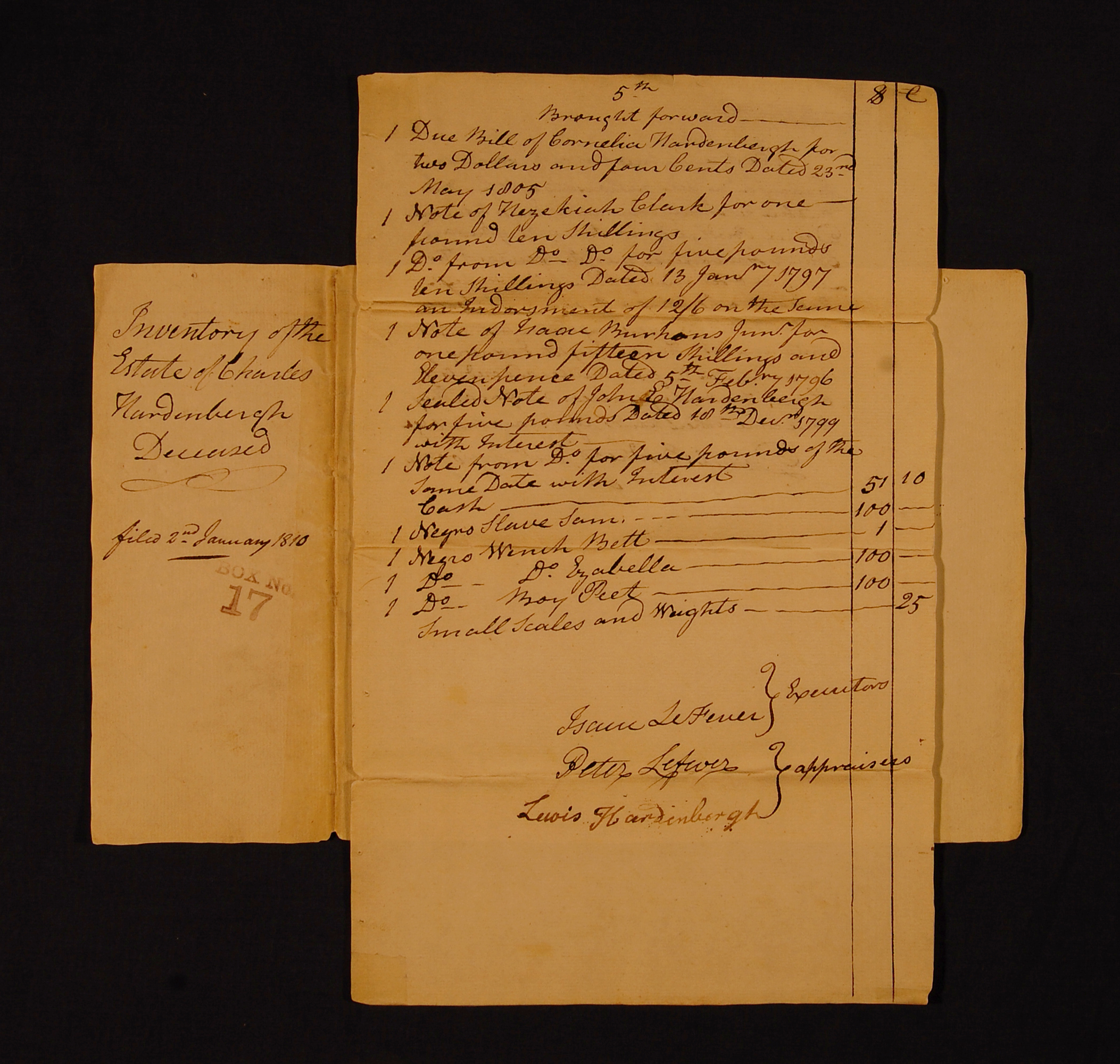
    photo of last page of handwritten inventory
    Inventory of Charles Hardenbergh’s estate, listing Isabella, her brother Peter and her mother Bett (source) (full inventory)

    The younger Colonel Johannes Hardenbergh was lieutenant Colonel of the Fourth or Middle Regiment, Ulster County in August 1775, and received his appointment as Colonel in February 1779. Married to Maria LeFevre, he lived with his family in Swartekill, Esopus, which was a short distance north of Rifton and also part of the town of Hurley. Colonel Johannes Hardenbergh Jr. appears in the 1790 census for Hurley with seven slaves, who must have included Isabella’s parents James and Betsey and possibly siblings of Isabella who were sold before she was born. It was his son Charles who inherited Sojourner Truth and her family. Born in 1765, he was married to Annetje LeFevre and died in 1808. The inventory of his estate, written on May 12, 1808 and filed on January 2, 1810 lists “1 negro slave Sam, 1 negro wench Bett, 1 d(itt)o Izabella (and) 1 d(itt)o boy Peet.” Isabella, Peter, and the man named Sam were valued at 100 dollar but Isabella’s mother Bett was only valued at one dollar. Rather than being sold, she was freed so that she could take care of her old and sick husband, James Bomefree. Sadly, as recounted in The Narrative, “Mama Bett” (spelled as “Mau-mau Bett” by Olive Gilbert) preceded him in death, and he died in miserable circumstances.


    Jacob Rutsen Hardenbergh (1736–1790)

    Image of stained and partly damaged letter
    Jacob R. Hardenbergh to his father, December 6, 1777 (in Dutch, read up close)

    Like his brothers and sisters, Jacob Rutsen Hardenbergh was born in the family home “Rosendale.” He left home when he was around seventeen years old to prepare for the ministry at the home of John Frelinghuysen (1727-54), a young prominent Dutch Reformed minister, who served five congregations in central New Jersey, and lived in what is now known as the “Old Dutch Parsonage” in Somerville. When Frelinghuysen unexpectedly died in 1754 the young Hardenbergh took over the five pulpits. He married Frelinghuysen’s much older widow, the pietist Dina van Bergh (1725–1807) in 1756 and was ordained to the ministry in 1758. Whether he also retained the three slaves (including a child), whom Dina had inherited according to her first husband’s will, is not known. But they did have at least one slave at the parsonage: in a letter from Jacob Rutsen Hardenbergh, written (in Dutch) to his father in 1777, he wrote that he had to hurry “because the negro is getting ready to go”  (“wijl de neger gereet maakt om af te gaan“).

    In 1781 Hardenbergh was called by the congregations of Marbletown, Rochester, and Wawarsing in Ulster county, and left New Jersey to move back into his parental home “Rosendale” with his family. He returned to New Jersey in 1786 to serve as minister in New Brunswick and president of Queen’s College. Whether he maintained any enslaved people during these last four years of his life we do not know. There are no slaves mentioned in his will.


    This blog post was extracted from the presentation “Land, Faith and Slaves: the shared heritage of the Hardenbergh family, Rutgers University, and the Dutch reformed Church on June 17, 2017 

  • Forgotten Heroes: New Jerseyans and Rutgers Alumni During the Great War

    Facebooktwitterredditpinterestlinkedinmail

    By Flora Boros


    On April 6, 1917, one hundred years ago, the United States entered The Great War (as it was known then) or the First World War (as we know it today). New Jersey contributed 72,946 draftees and 46,960 volunteers—with more than 140,000 serving by the war’s end—for the final seventeen months of the war. Although the Garden State is teeming with over 160 memorials dedicated to the brave individuals who served in the Great War, their names were largely forgotten until recently. In this blog post we will feature two of these long forgotten New Jersey heroes, using materials from the Rutgers College War Service Bureau and the Terradell Family Papers at the Rutgers University Special Collections and University Archives. These materials, along with many other one-of-a-kind artifacts, are currently on display in “Heaven, Hell, or Hoboken!”: New Jersey in the Great War.

    With a growing number of Rutgers men in Uncle Sam’s olive drab, Earl Reed Silvers (RC 1913) established the Rutgers College War Service Bureau (RCWSB) in August 1917 to keep the 800 men in service up to date with frequent news of the college and each other. “As far as can be ascertained, no college or university in the United States kept in such close touch with her alumni and undergraduates in the army or navy,” reflected Silvers, “nor has any college the mass of material, war letters and relics, which were sent to old Rutgers by her appreciative sons.”

    Portrait of Theodore Rosen. Undated, ca. 1926.

    Counted among the alumni who corresponded with Silvers and the RCWSB was Theodore “Theo” Rosen (1895-1940), Rutgers College Class of 1916, who served as First Lieutenant in the 315th Infantry, 79th Division.

    Creeping and crawling toward the German line in search of a machine gun nest on the early morning of November 4, 1918, Rosen found himself in the path of fire. One bullet rendered his right arm useless; the other tore through his left cheek, filling his mouth with blood and taking out seven teeth. The 23-year-old would lose the top of his left thumb, break his left wrist, have his right arm amputated, and suffer impaired hearing and vision before the onslaught was over. He only recovered consciousness as a P.O.W. on the operating table at Longwy, where he remained prisoner for the eight days before the Armistice in November 1918. Commendation letters in Rosen’s RCWSB file stressed Rosen’s status as a medical marvel thanks to a “masterpiece of surgery.” Noting his “gallantry in action and meritorious services,” Rosen garnered high praise from a department dealing with the paperwork for nearly 4 million American troops.

    Excerpt of “The Man Who Wouldn’t Be Licked!” Real Heroes (1941) (view complete comic)

    Following his early death, the war hero’s perseverance and valiance was preserved in the sole issue of Real Heroes (1941) in a comic entitled “The Man Who Wouldn’t Be Licked!” In short, Rosen’s story truly gives new meaning to the phrase “mind over matter.”

    Click to read the complete details of Rosen’s “Remarkable Story” from the RCWSB’s Selected Letters, which Earl Reed Silvers intended to turn into a book.


    But for every story of Great War survival, there are hundreds of stories of heroes who never made it back home to New Jersey. Counted in the tally of the 3,836 New Jerseyans lost to combat, accident, and disease, was Trentonian Russell “Russ” J. Terradell (1897-1918), whose story is housed in the Terradell Family Papers.

    First page of Russell Terradell’s letter to his mother. Undated, ca. Oct. 1918. (view complete letter)

    Around a week after Rosen fought in the Meuse-Argonne Offensive, Emma L. Terradell tore open this six-page letter from her son, Private Russell Terradell, 61st Regiment, 5th Division. According to Dr. Richard Grippaldi of Rutgers University, such final “just in case” letters were written by soldiers to their families on the eve of battle since the early days of the Civil War, and remain a custom in combat units to this day.

    Russell Terradell surrounded by his mother and three sisters Eleanor, Emma “Loretta,” and Streline “Mercedes.” Undated, ca. 1917.

    Slain-in-action on October 17th 1918, Terradell’s begins with the introductory understatement, “To the dearest of Mothers, When this reaches you you will know that I have passed over, Mother I know how horribly upset you will be over this and that the scar will always remain.” The 21-year-old patriotically justified his death as he attempted to console his family, “But we shall live forever in the results of our efforts. I did not make much of my life before the war but I believe I have done so now. Often one hears ‘Poor fellow cut off so young without ever having a chance of knowing and enjoying life.’ But for myself thanks for all you have done for me. I have crowded into twenty-one years enough pleasures and experiences of a lifetime, and that is why it is no hardship for me to leave this world so young.” The wrinkled onionskin paper still bears the marks of his mother’s tears one hundred years later, and I dare you not to get a bit choked up over this difficult-to-read letter.

    If you’re interested in learning more about New Jersey servicemen like Rosen and Terradell, please check out our latest exhibition, “Heaven, Hell, or Hoboken!”: New Jersey in the Great War. On display through September 15, 2017 in Alexander Library. Curator’s tours are available by appointment, please email inquiries to flora.boros@rutgers.edu.


  • Admiring the New Brunswick view in 1838

    Facebooktwitterredditpinterestlinkedinmail

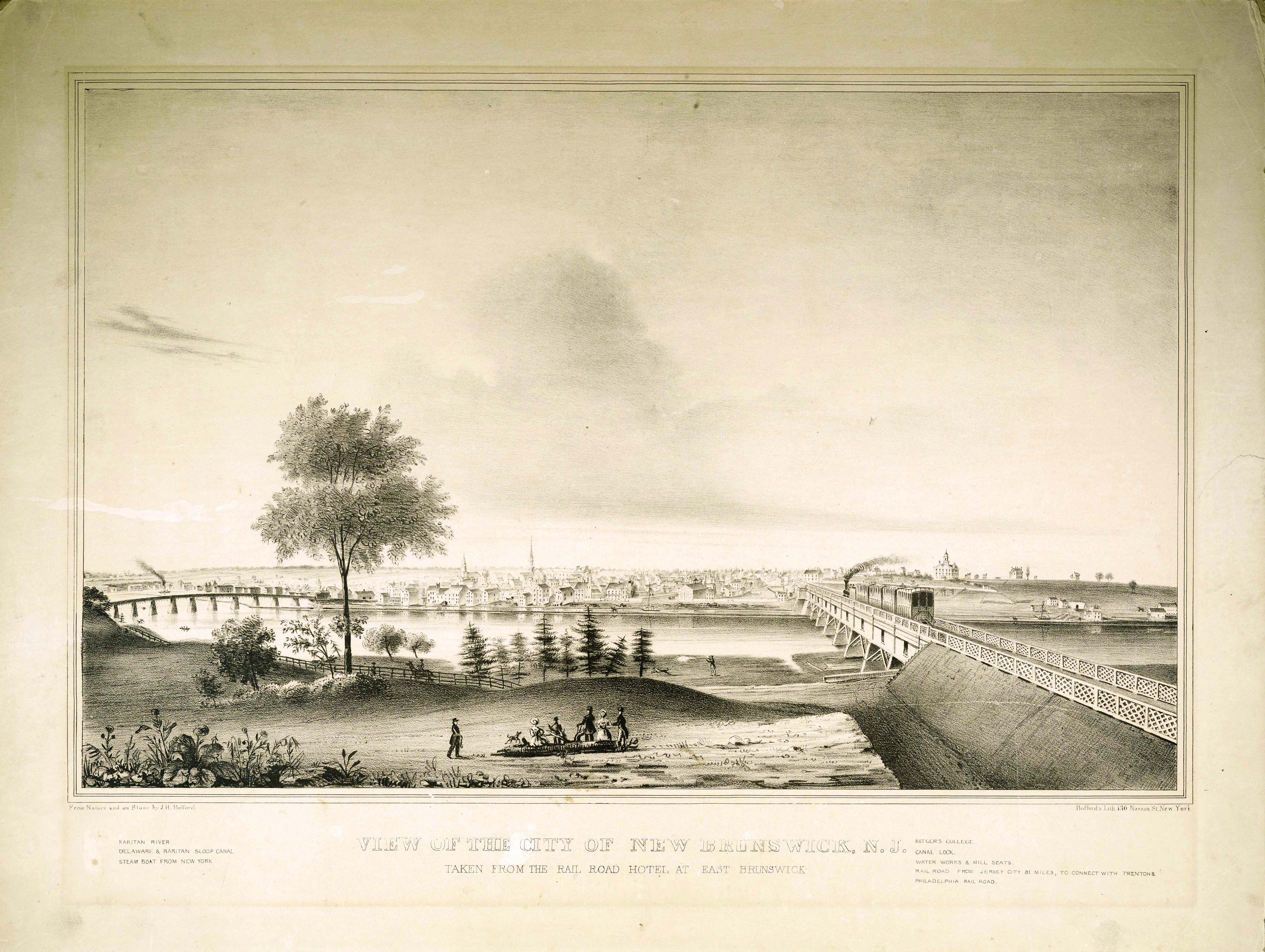
    View of New Brunswick by lithographer J.H. Bufford, seen from the Rail Road hotel on the other side of the Raritan River

    By Helene van Rossum

    Pencil sketch copy of lithograph by J.H. Bufford with caption "View of the City of New Brunswick, N.J.: Taken from the Rail Road Hotel at East Brunswick."
    Pencil sketch by C. C. Abeel, based on a lithograph by J.H. Bufford (view)

    Visitors to our new website may recognize the image in the top right corner as the yellowed pencil sketch in our recent exhibit Rutgers through the Centuries. Nothing is known about the artist C.C. Abeel, but we do know the original lithograph on which his drawing is based: J.H. Bufford’s View of the City of New Brunswick, N.J. taken from the Rail Road Hotel at East Brunswick. The lithograph, which can be found in our Pictorial Collection, was published about 1838 with a helpful list of the sites depicted. In this blog post we will have a closer look.

    Advertisement for the newly established hteol titled "Accommodation House at the Rail Road Depot, East Brunswick" by R. Witty
    New Brunswick Daily Times ad for the Rail Road Hotel, June 7, 1837


    The railroad and the Rail Road Hotel

    The Railroad Hotel was established shortly after the opening of the railroad from Jersey City to New Brunswick by the New Jersey Railroad and Transportation Company in 1836. The line ended at the terminus on the eastern bank of the Raritan River in what was known as East Brunswick (now Highland Park). Passengers to New Brunswick had to go down steep stairs from the tracks and take a carriage across the Albany Street bridge. Some passengers, however, went to the Railroad hotel instead, advertised as “a most desirable retreat during the summer months” for its “beautiful location” (right). It was from this hotel that the young artist and lithographer John Henry Bufford (1810-1870) drew his View of New Brunswick shortly after the building of the railroad bridge, which put an end to the East Brunswick terminus.


    Detail of the litograph depicting bridge over the RaritanRiver and horse back rider on the river bank
    Left part of Bufford’s “View of New Brunswick” with the Albany Street Bridge

    The Raritan River and sloop canal

    As Jeanne Kolva and Joanne Pisciotta describe in Highland Park: Borough of Homes the new two-tier railroad bridge, which carried pedestrians, carriages and wagons on its lower level, caused competition for the old Albany Street bridge. The wooden toll bridge, built in 1794 (#2 on the left), was left to deteriorate and was ultimately demolished in 1848. Parallel to the Raritan (#1) on the New Brunswick side of the river was the newly dug Delaware & Raritan Canal or, in Bufford’s words, “Sloop Canal” (#4). One of the major engineering feats of the era, it was created between 1830 and 1834 for three million dollars, dug by immigrants, mainly by hand. Canal boats carrying freight were towed by mules along the canal, but in Bufford’s lithograph there are only one-masted sailboats (sloops). To complete the picture of New Brunswick as a transportation hub, Bufford drew a steamboat from New York, one of the many managed by Cornelius Vanderbilt or one of his competitors (#3).


    Detail of the lithograph depicing railroad bridge with train and Rutgers College in the distance
    Right part of “View of New Brunswick” with railroad, Rutgers College and canal lock

    Railroad bridge and view to the right

    The new bridge, built in 1838, was the first railroad bridge across the Raritan river.  Bufford’s depiction of the lower tier (#7) makes the noise and darkness experienced by passengers and horses easy to imagine. To the north of the new railway bridge was the canal lock that allowed boats to move from the upper to the lower level of the Raritan & Delaware Canal at New Brunswick.

    Detail of a colored map showing Raritan River and rail road bridge
    Canal lock and water power plant to the north of the Rail Road Bridge, 1837 (view)

    Bufford drew the canal lock as well as structures that he listed as “Water Works & Mill seats” (#8). Maps of New Brunswick from our Map Collection shed light on what Bufford depicted. While a map of 1837 only displays the water power plant behind the lock, a later map reveals an adjoining saw mill and paper and cotton factory. In the distance Bufford drew Rutgers College, founded as “Queens College” in 1766 (#9). The first cornerstone of the building, presently known as “Old Queens,” was laid in 1809 but it was only expanded to its present size in 1825 after financial support was received from various sources, including the philanthropist Henry Rutgers, who also donated the college’s bell.


    Detail of the lithograph depicting hikers sitting on a tree trunk admiring the view
    Middle part with hikers, horse rider and man with dog and gun

    Admiring the view

    As described in Views and Viewmakers of Urban America businesses greatly benefited from the portrayal of their cities as bustling centers of industry, commerce, and progress. In stark contrast with the novelties of the canal, railroad, and bridge is the tranquility of the scene at the front. Seated on a tree trunk is a company of wanderers (5), admiring the view, which includes the sloops on the canal (#4) and the spires of the Dutch Reformed Church (6, left) and Christ Episcopal Church (6, right). On the left is a horse rider following the path along the river; on the right we see a man and a dog, hunting birds. They all look like they will soon have refreshments at the Railroad Hotel.


    With thanks to Al King, Manuscripts Curator.


    Further study


  • Summer on the Shore

    Facebooktwitterredditpinterestlinkedinmail

    By Catherine Babikian

    The Jersey shore is known for beaches and boardwalks, but what’s for dinner?

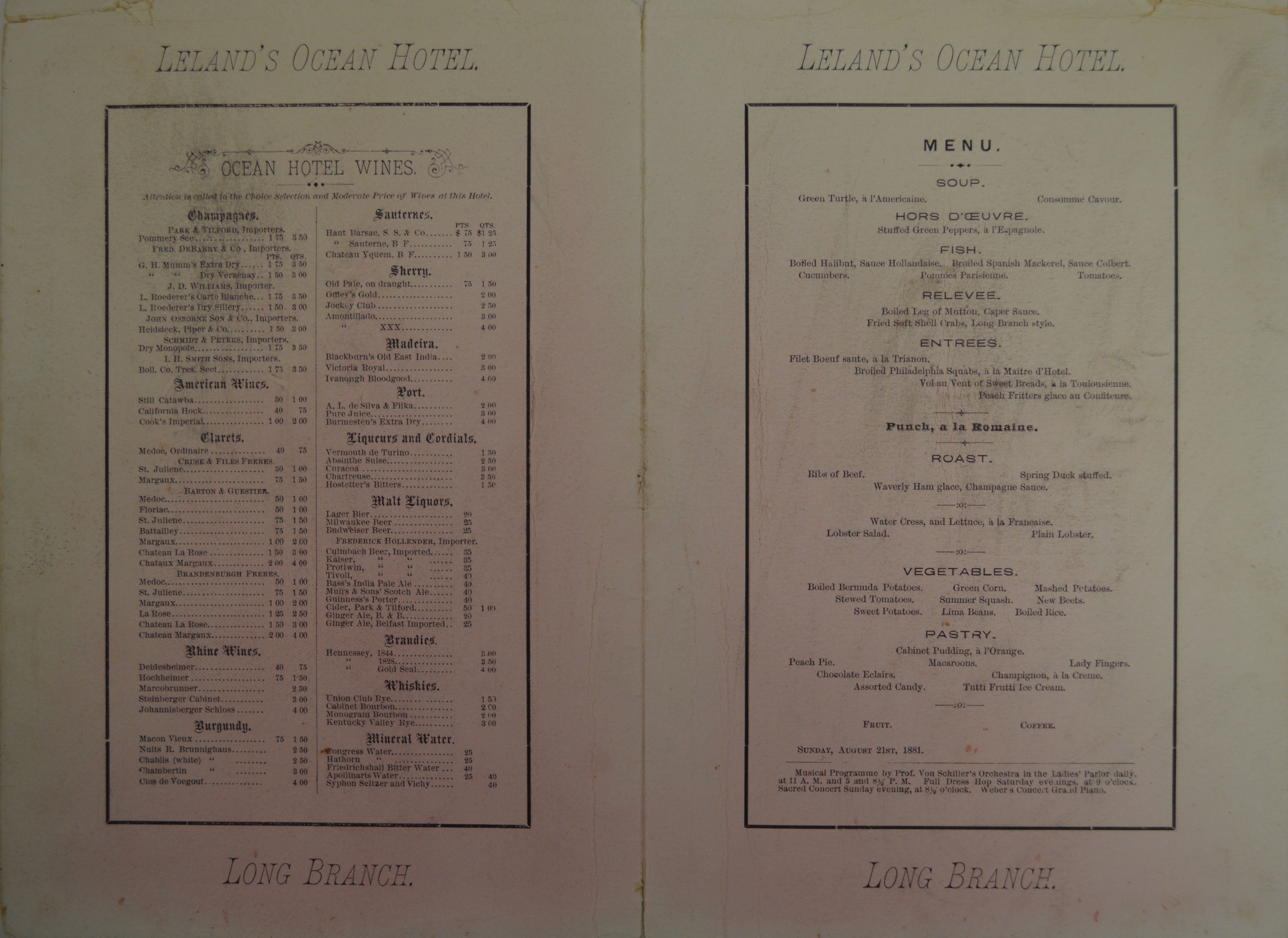
    Cover, Leland's Ocean Hotel menu, 1880s.
    Cover, Leland’s Ocean Hotel menu, 1880s. Sinclair New Jersey Restaurant Menu Collection.

    At the turn of the century, wealthy vacationers enjoyed elegant meals at oceanfront hotels. Guests at Lelands’ Ocean Hotel in Long Branch could choose from beef ribs, lobster, and halibut for dinner, and peach pie, chocolate eclairs, and tutti frutti ice cream for dessert.

    010
    Leland’s Ocean Hotel wine list. Sinclair New Jersey Restaurant Menu Collection.


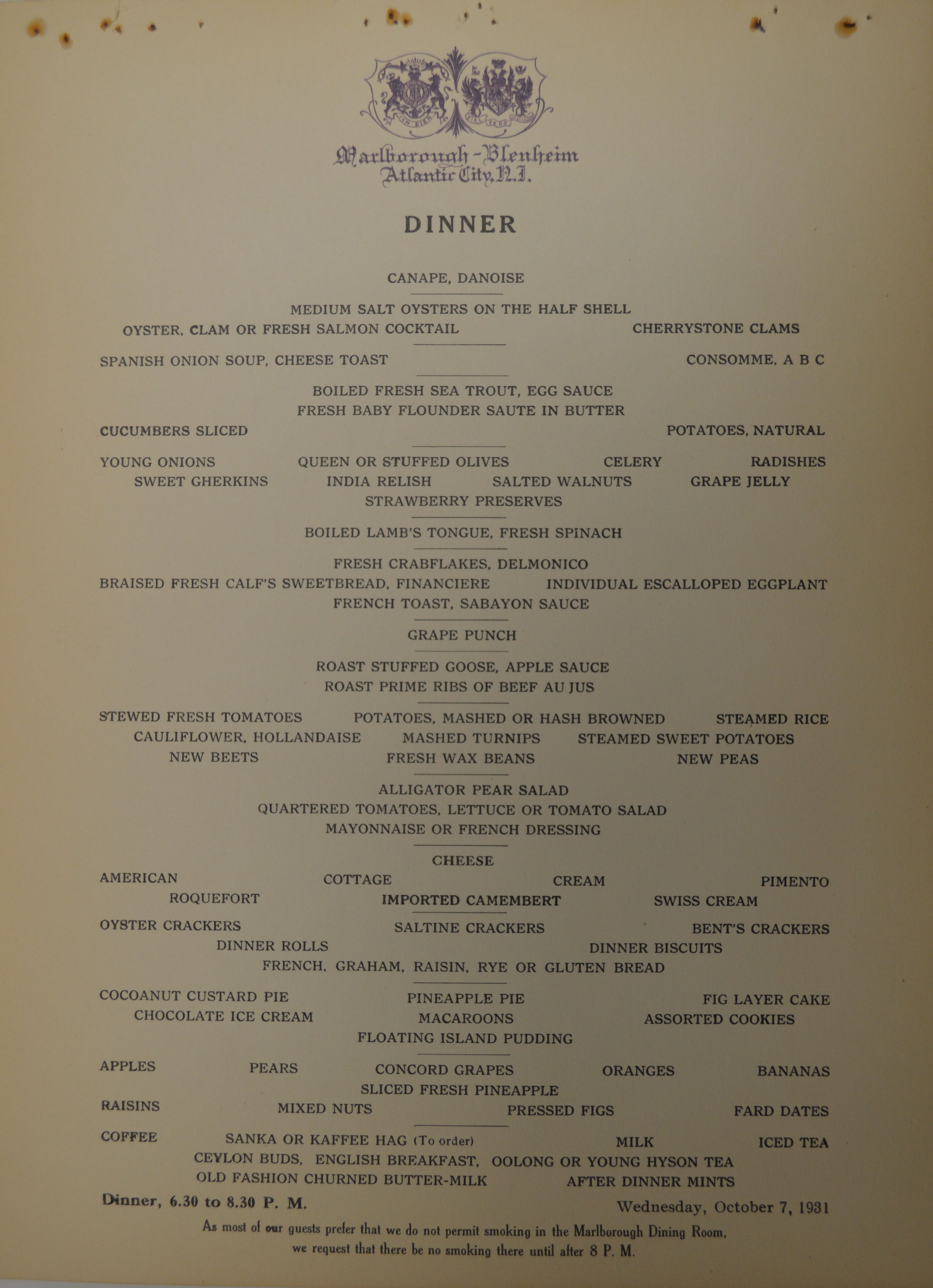
    In Atlantic City, guests at the famous Marlborough-Blenheim Hotel sat down for afternoon tea, then tucked into roast goose with apple sauce for dinner. Camembert cheese and pineapple pie finished off the meal.

    Marlborough Blenheim Hotel, 1931. Sinclair New Jersey Restaurant Menu Collection.

    But fancy hotels weren’t the only places to get a good dinner. In the 1960s, Taborn’s Restaurant in Asbury Park served up fried shrimp, scallops, clams, and oysters, along with a wide variety of ice cream sodas, milkshakes, and fresh parfaits for a sweet finish. The lunch menu included grilled frankfurters and blueberry griddle cakes.

    Taborn's Restaurant, 1960s. Sinclair New Jersey Restaurant Collection.
    Taborn’s Restaurant, 1960s. Sinclair New Jersey Restaurant Menu Collection.

    Looking for more shore delicacies? The new Sinclair New Jersey Restaurant Menu collection contains these menus and many more– down the shore and around the state.

  • Snow in the City

    Facebooktwitterredditpinterestlinkedinmail

    By Christie Lutz

    With the first snowstorm of the season approaching, we reflect on the Great Blizzard of 1888, also known as the Great White Hurricane. The storm buried the East coast from Maryland to Maine as well as the Eastern provinces of Canada.  The following images of New Brunswick during the storm are from our New Brunswick Views photograph collection.

    George Street
    George Street


    George Street, looking north towards Albany Street.
    George Street, looking north towards Albany Street.


    Northwest corner of George and Bayard Streets, south of Church Street.
    Northwest corner of George and Bayard Streets, south of Church Street.


  • Congregation Poile Zedek, New Brunswick

    Facebooktwitterredditpinterestlinkedinmail
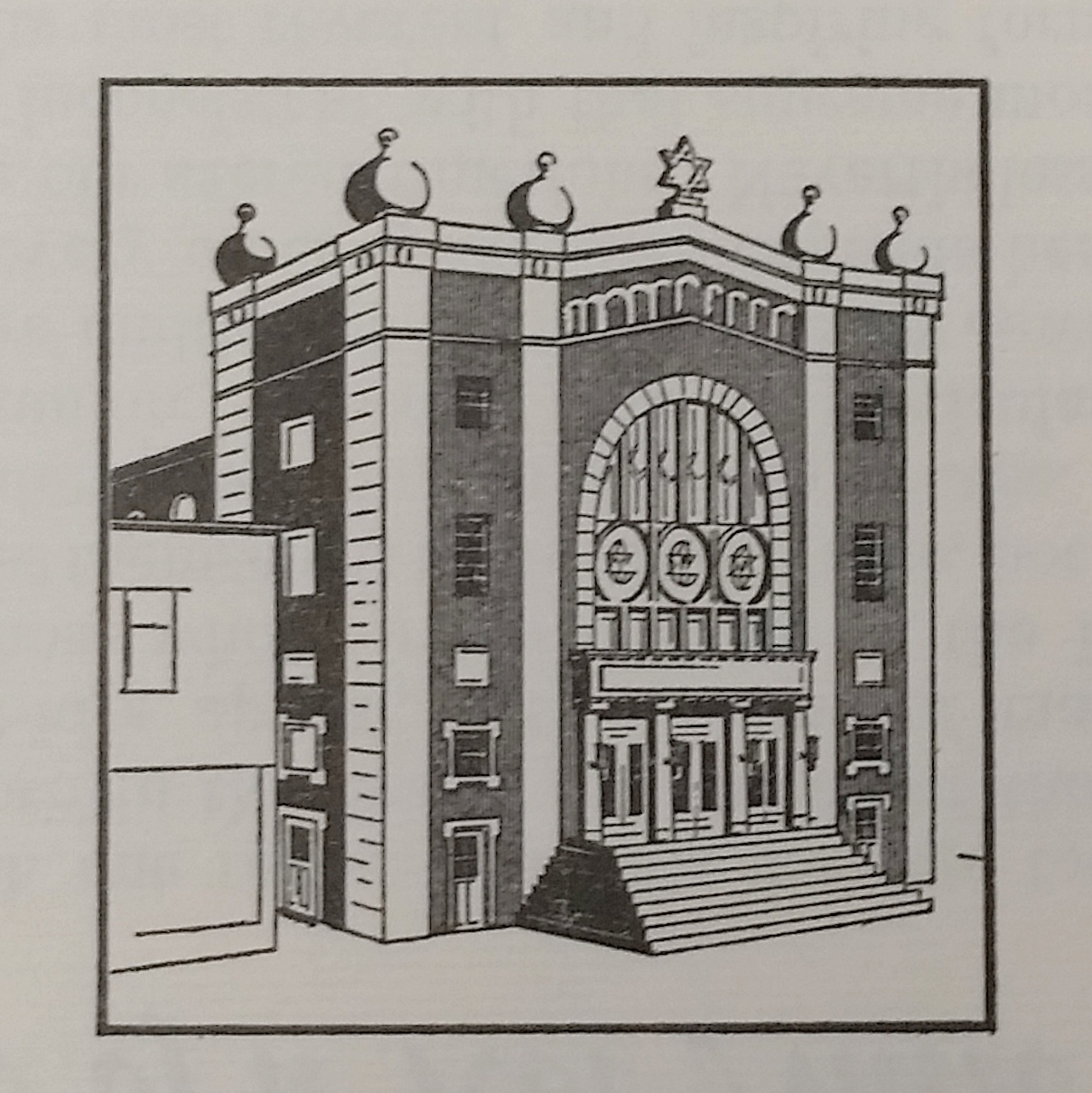
    Sketch of Poile Zedek
    Sketch of Poile Zedek


    By Ron Becker

    We at Rutgers University Libraries were saddened when on October 23rd, we learned that Congregation Poile Zedek suffered a terrible loss when fire ravaged their beautiful historic synagogue building damaging the structure and its contents including the loss of most of their sacred Torahs. Founded in 1901, Poile Zedek was part of a once thriving New Brunswick, NJ Jewish community centered in the downtown Hiram Market area. Poile Zedek was one of four synagogues in the neighborhood which included Ahavas Achim, Etz Ahaim, and Ohav Emeth. In their early years, each had a predominance of members who hailed from different parts of Europe. Poile Zedek was Polish, Ahavas Achim was Russian, Ohav Emeth was Hungarian, and Etz Ahaim was Sephardic (Spain and Portugal).   The other three congregations are now centered in Highland Park where the majority of the New Brunswick Jewish community migrated. Ahvas Achim suffered a similar tragic fire and rebuilt in 1987 in Highland Park.

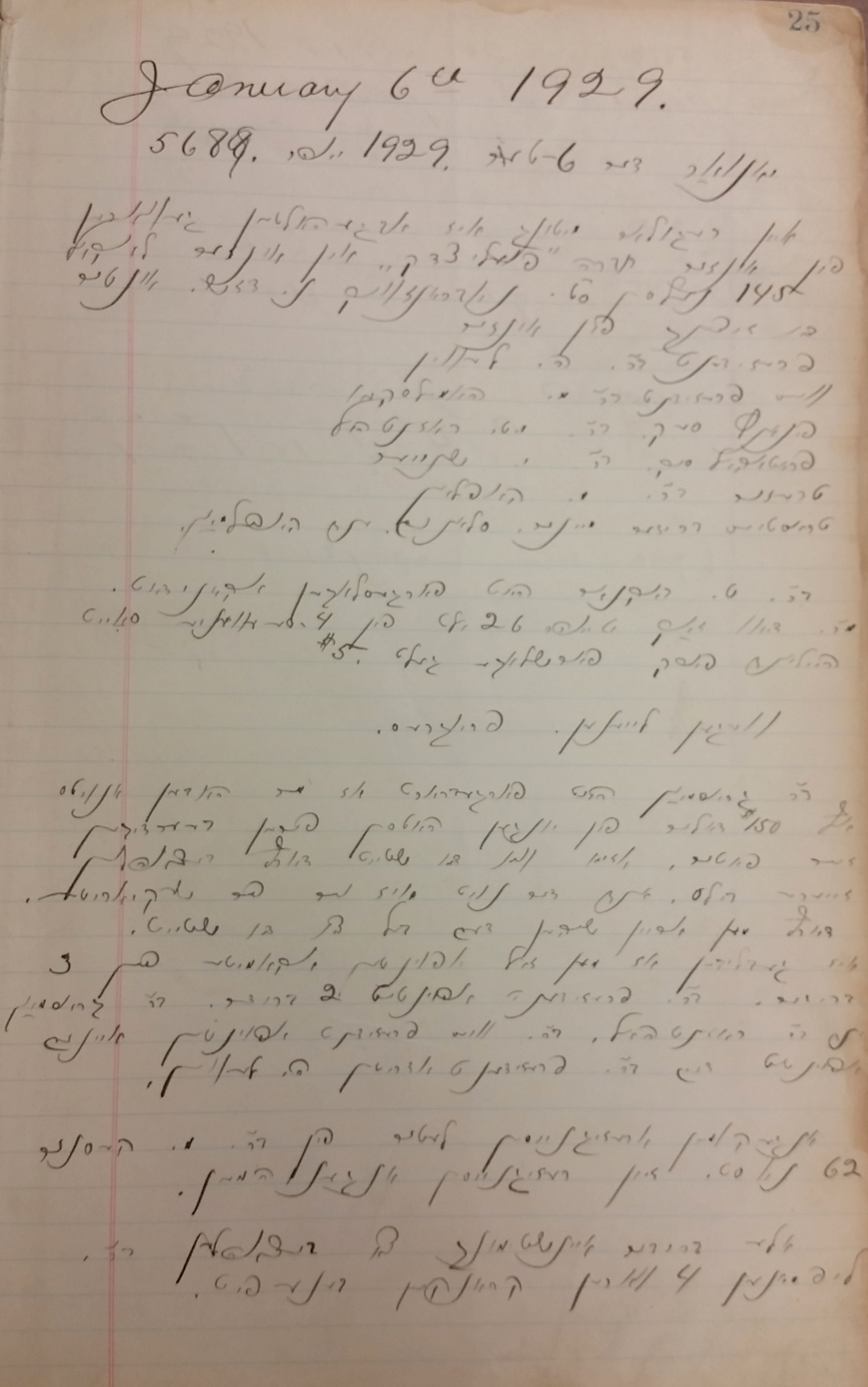
    Poile Zedek minutes written in Yiddish
    Poile Zedek minutes written in Yiddish

    We at the Rutgers University Libraries extend our best wishes to the members of Poile Zedek in their desire to rebuild in the wake of this tragedy. One very small consolation is that they had the foresight to donate their congregational records to Special Collections and University Archives in 1987.   Consisting of the Constitution, minutes of meetings, financial documents, building committee files and other memorabilia, the materials date from 1917. All the early records are in the Yiddish language. The public is invited to visit our repository to examine this material which is described in detail through the finding aid which can be accessed at

    http://www2.scc.rutgers.edu/ead/manuscripts/poilezedekf.html

  • Hurricane Sandy Three Years On

    Facebooktwitterredditpinterestlinkedinmail
    Sinclair New Jersey Broadsides Collection
    Sinclair New Jersey Broadsides Collection

    By Christie Lutz

    Three years ago today, Hurricane Sandy wreaked havoc on New Jersey, New York and the surrounding region. Since then, a plethora of books have been published that document Sandy’s impact, both physical and emotional. They include powerful photograph collections, meteorological explorations, children’s books,  and works of fiction.

    A number of these books feature the Jet Star, the Seaside Heights roller coaster that famously fell into the Atlantic when Sandy destroyed the Casino Pier, on their covers. The powerful image of the giant coaster sitting in the ocean became a symbol of Hurricane Sandy. The image is perhaps at its most poignant on the cover of Richard Ford’s collection of Frank Bascombe stories, entitled Let Me Be Frank With You, set in the months following the storm.

    Below is a list of Hurricane Sandy-related books in the Sinclair New Jersey Collection.

    (more…)

  • New Jersey and Banned Books

    Facebooktwitterredditpinterestlinkedinmail

    By Tara Maharjan

    Each year the American Library Association celebrates Banned Books Week the last week of September.  This weeklong celebration focuses on banned and challenged books.  What defines a banned or a challenged book?  A banned book is one that has been removed from the shelves completely.  Books that have been challenged are an attempt by a person or group to remove or restrict materials to protect others.  Books have been challenged for being considered “sexually explicit,” for having “offensive language,” or for being “unsuited to any age group.”

    This week, we celebrate New Jersey authors who have had material banned or challenged.

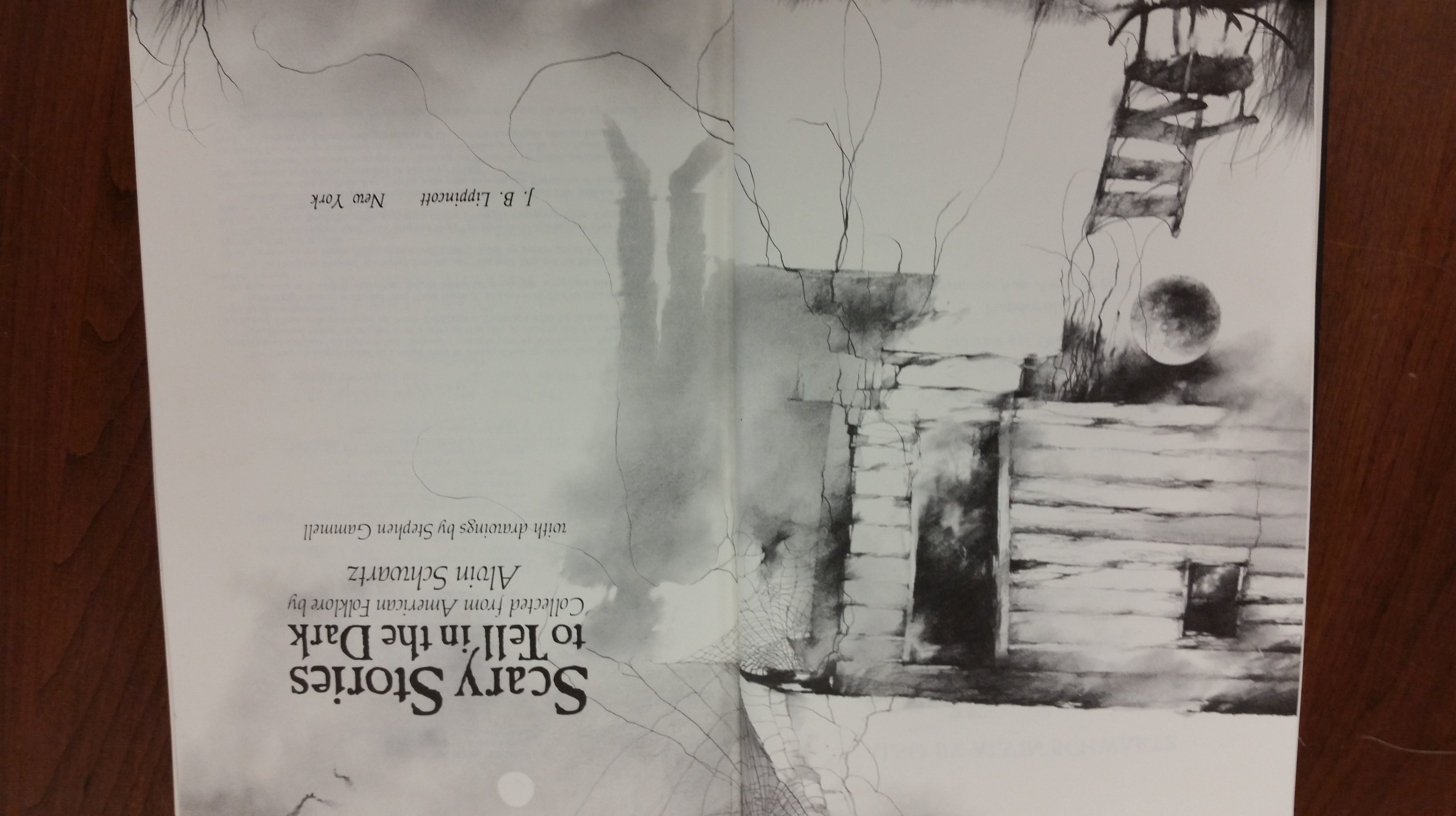
    Title page for "Scary Stories to Tell in the Dark."

    Scary Stories to Tell in the Dark by Alvin Schwartz.  This series of children’s books based on folklore and urban legend is on the American Library Association’s list of most challenged series of books from 1990–1999 and is listed as the seventh most challenged from 2000–2009 for violence.  Schwartz lived in Princeton at the time of his death in 1992.

    Covers of Judy Blume's "Are You There God? It's Me, Margaret" and "Tiger Eyes."

    Tiger Eyes and Are You There God? It’s Me, Margaret both by Judy Blume.  Tiger Eyes was challenged for its depiction of violence, alcoholism, and discussion of suicide.  Whereas, Are You There God?  It’s Me, Margaret was challenged for sexual references and alleged anti-Christian sentiment.  Blume was born in Elizabeth, New Jersey.  As an added fun fact, she serves on the National Coalition Against Censorship.

    Cover of Allen Ginsberg's "Howl"


    Howl by Allen Ginsberg.  The poem was part of a 1957 obscenity trial for the topics of illegal drugs and sexual practices.  A California State Superior Court ruled that the poem was of “social importance,” and dismissed the case.  Ginsberg was born in Newark and grew up in Paterson.

    1855 title page for "Leaves of Grass."

    Leaves of Grass by Walt Whitman.  This poetry collection was considered obscene upon its release in 1855.  We are sorry to say that libraries refused to buy the book, and the poem was legally banned in Boston in the 1880s and informally banned elsewhere.  Whitman spent the later years of his life until his 1892 death in Camden.

  • Bridgegate

    Facebooktwitterredditpinterestlinkedinmail

    By Christie Lutz

    As we mark the second anniversary of “some traffic problems in Fort Lee,” we take a look at the magisterial George Washington Bridge during an earlier, more innocent time.

    Images below from George Washington Bridge Over the Hudson River at New York: built and owned by the Port of New York Authority, fabrication and erection of towers and floor by McClintic-Marshall Corporation. Bethlehem, Pa. : McClintic-Marshall Corp., 1932. (Sinclair New Jersey Rare Books Collection)

    gw-bridge-towers-and-floor-snclx-tg25-n515-m31932-cover

    While the towers, floor and girders were fabricated by McClintic-Marshall, a subsidiary of Bethlehem Steel, the bridge’s cables were made by Trenton’s John A. Roebling’s Sons.  Special Collections holds the  Roebling Family Papers and related collections. The Sinclair New Jersey Collection includes numerous books on the Roebling family and business as well as company catalogs and brochures.

    gw-bridge-towers-and-floor-snclx-tg25-n515-m31932-page-44

    gw-bridge-towers-and-floor-snclx-tg25-n515-m31932-page-57

    gw-bridge-towers-and-floor-snclx-tg25-n515-m31932-page-59

What Exit?

News and information about holdings, events, acquisitions, and New Jerseyana at the Department of Special Collections and University Archives, Rutgers University Libraries, New Brunswick

Follow Us

This field is required.

Categories

Recent Posts

Tags

Anglo-Dutch wars cookbooks Cornelius Van Horne digitization Dinah van Bergh Hardenbergh Dutch records Dutch slave owners election cake farm ledgers Frelinghuysen Family Great War Hardenbergh Familie Hebrew herbals Jacob Rutsen Hardenbergh Johannes G. Hardenbergh manuscripts New Brunswick New Brunswick Music Scene Archive New Jersey Dutch NJ Soldiers Pictorial collection Postcard Collection Scarlet and Black Sinclair NJ Cookbook Collection Soujourner Truth Theodorus Jacobus Frelinghuysen Trenton Ukawsaw Gronniosaw Ulster County NY World War I